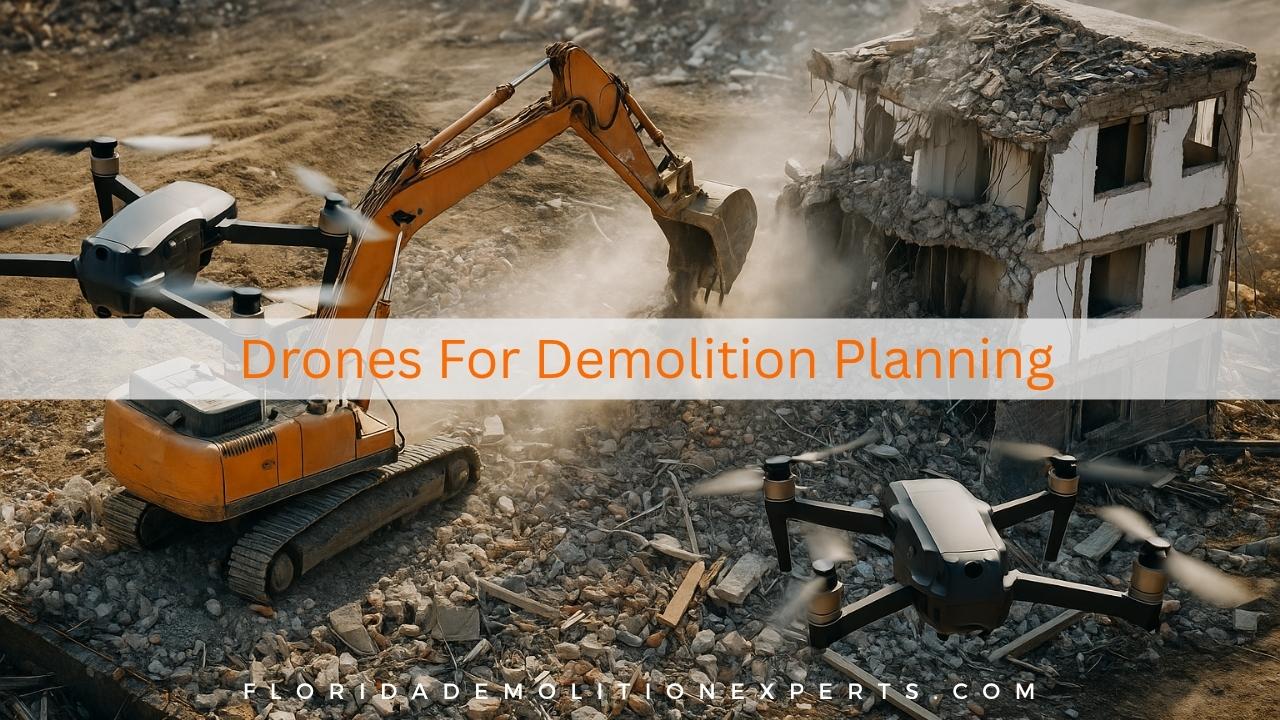
Demolition is one of the most hazardous and complex areas of construction, requiring engineers to carefully assess structural stability, identify risks, and plan every step with precision.
Traditionally, this process depended on manual surveys, dangerous site inspections, and slow measurement methods.
Today, drones are transforming demolition planning with fast, accurate data and safe aerial access. For modern contractors, drone-assisted planning isn’t the future; it’s the new industry standard.
In this article, we dive into how drones are revolutionizing demolition planning and why the companies adopting this technology are leading the industry.
A New Era of Demolition Planning: Why Drones Matter
Drones offer a perspective that humans cannot match. By capturing high-resolution aerial data within minutes, drones eliminate the need for risky rooftop inspections, unstable site entry, or scaffolding-based surveys. The result is safer workflows, deeper accuracy, and more informed planning.
With powerful onboard tech, thermal imaging, LiDAR scanning, photogrammetry, and 3D modeling, drones collect structural data that would take human teams days or even weeks to gather. This shift not only reduces operational costs but also eliminates uncertainty from the earliest stages of a demolition project.
1. Faster, More Accurate Structural Assessments
Traditional demolition assessments require manual measurements, climbing unstable structures, or shutting down areas to allow engineers safe access. Drones bypass all of that.
Drones create:
- High-resolution aerial photos
- Precise measurements of distances, heights, and angles
- Real-time inspections of roofs, cracks, and support areas
- Data that feeds into 3D structural models
This means demolition planners can identify weaknesses, structural decay, or collapse risks without ever setting foot on hazardous surfaces. Faster assessments lead to quicker project approvals and shorter planning cycles, saving clients time and money.
2. 3D Mapping and Digital Twins for Smarter Decision-Making
One of the most significant breakthroughs in drone technology is the ability to create digital twins of buildings. Using photogrammetry or LiDAR scans, drones generate highly detailed 3D models that replicate the structure’s exact dimensions and condition.
These digital twins allow engineers to:
- Simulate demolition sequences
- Test blast patterns
- Analyze debris fall zones
- Identify risk areas
- Plan equipment placement
- Optimize worker routes
This level of precision was nearly impossible a decade ago. With drones, it becomes a standard part of the planning process, drastically improving safety and accuracy.
3. Enhanced Safety and Hazard Detection
Every demolition site poses hazards: loose roofs, unstable walls, overgrown brush, asbestos areas, and more. Drones help identify these dangers before humans are exposed to them.
Thermal imaging drones can detect:
- Hidden heat signatures
- Electrical hazards
- Weak insulation points
- Water intrusion inside walls
- Structural gaps hidden from plain sight
By discovering hazards early, demolition teams reduce accidents, OSHA violations, and costly delays.
4. Better Communication With Clients and Stakeholders
Communicating demolition plans to clients often requires visual proof. With drone data, demolition companies can show:
- Before-and-after site visuals
- Aerial progress images
- 3D models of planned work
- Time-lapse demolition sequences
This transparency improves trust, speeds decision-making, and helps clients understand the project’s complexity. For municipalities or large commercial demolitions, drones ensure all stakeholders stay aligned.
5. Real-Time Monitoring During Active Demolition
Drones don’t stop helping once the planning stage is complete; they continue providing value throughout the demolition.
Real-time drone monitoring allows teams to:
- Track debris movement
- Ensure equipment placement is correct
- Check for shifting structures
- Monitor dust and safety perimeter boundaries
- Identify immediate post-blast hazards
Drone footage helps site supervisors make quick, informed decisions from a safe distance. It also creates a detailed record of the demolition for compliance documentation and future planning.
6. Cost Savings for Contractors and Clients
By replacing manual surveys, reducing risk, and accelerating planning, drones cut costs across the entire demolition lifecycle. Fewer person-hours, fewer surprises, and fewer delays mean more predictable budgets and faster project completion.
Clients benefit from:
- Lower operational costs
- More accurate estimates
- Faster turnaround
- Reduced risk of structural surprises
Contractors benefit from improved workflow efficiency and fewer safety-related stoppages.
7. Greater Environmental Responsibility
Modern demolition is no longer just about tearing down buildings; it’s about doing it responsibly. Drones help environmental compliance through:
- Dust monitoring
- Waste tracking
- Identifying hazardous material zones
- Mapping recycling and salvage routes
These capabilities support more sustainable demolition practices and help companies meet environmental regulations without guesswork.
The Bottom Line
Drones have quickly become one of the most valuable tools in modern demolition planning. The companies that leverage them gain competitive advantages through safer operations, faster planning, more precise data, and higher client satisfaction.
As drone technology continues to advance, demolition planning will only grow more accurate, data-driven, and efficient.
For property owners, contractors, or developers planning a demolition in the coming years, choosing a company that uses drone-based planning is no longer optional; it’s innovative, strategic, and far safer.
Plan Your Demolition the Smart Way
Ready to start your demolition project the smart way? Contact Florida Demolition Experts today for a safe, efficient, and precision-planned demolition backed by advanced technology.