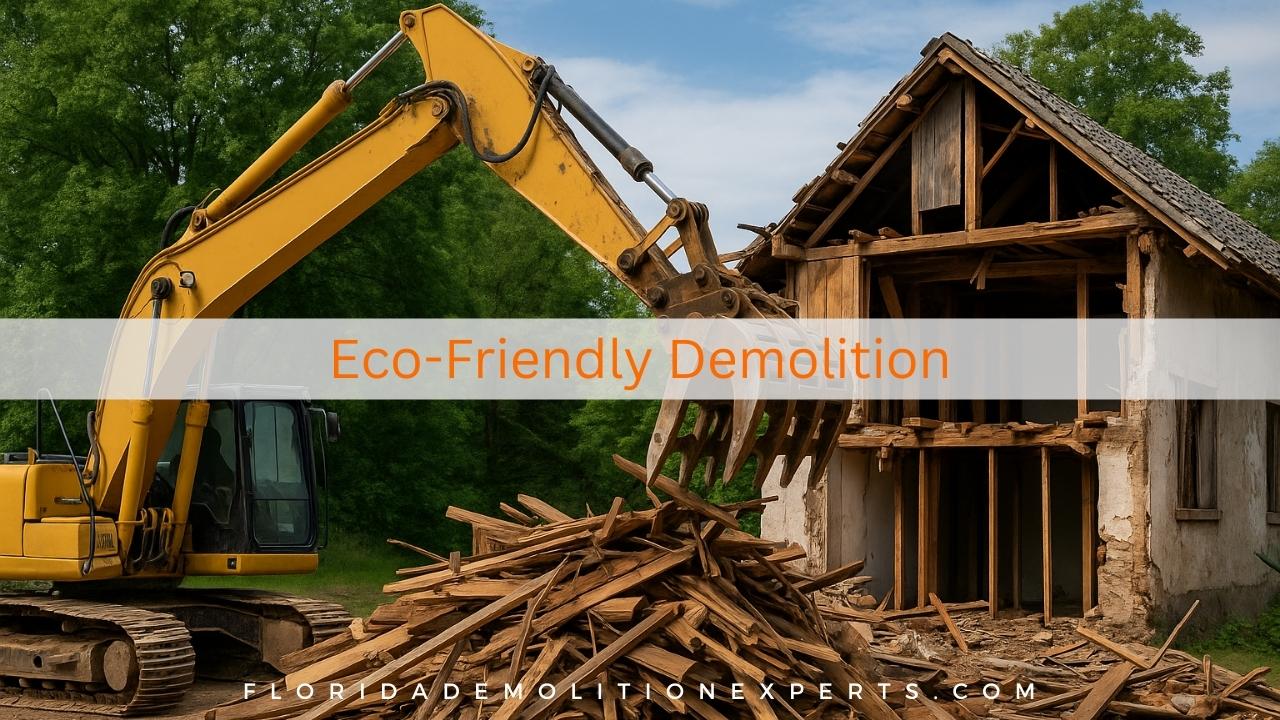
Demolition is entering a new era, one where environmental responsibility matters as much as speed and efficiency. Instead of sending tons of debris to landfills, eco-friendly demolition focuses on recovering materials, reducing waste, and recycling as much as possible.
This approach not only protects the environment but also lowers project costs and supports sustainability goals across the construction industry.
Why Eco-Friendly Demolition Matters
Traditional demolition generates massive waste, most of which ends up in landfills. However, a large portion of this material, wood, metals, concrete, bricks, and fixtures, can be reused or recycled.
When demolition is handled the green way, the benefits are significant: reduced disposal costs, less environmental pollution, improved safety, and alignment with green-building standards like LEED.
Eco-friendly demolition allows builders, homeowners, and developers to make smart, environmentally responsible choices while still achieving fast project timelines.
1. Conducting a Pre-Demolition Audit
A sustainable demolition project begins long before the first wall comes down. A pre-demolition audit identifies the materials within a structure, highlights hazardous elements, and maps out what can be salvaged or recycled.
Professionals assess:
- Reusable items like doors, tiles, cabinets, and beams
- Valuable recyclables such as metal, copper, and concrete
- Hazardous materials that need specialized handling
This initial step ensures the project is strategic rather than destructive, setting the stage for maximum waste recovery.
2. Salvaging and Reusing Valuable Materials
Instead of breaking everything apart, eco-friendly demolition often uses deconstruction, a methodical dismantling process that preserves materials for reuse. Many elements inside a building have remarkable resale or reuse value.
Everyday items that can be saved include doors, windows, hardwood flooring, bricks, roofing tiles, lighting fixtures, and kitchen fittings. These items can be reused on-site, repurposed, sold to reclaim value, or donated to community-based building programs. This reduces the overall amount of new materials needed in future projects.
3. Recycling Heavy Construction Materials
Concrete, steel, and asphalt make up a significant share of demolition debris. Fortunately, these materials are highly recyclable.
Concrete can be crushed to create aggregate for new foundations or roadbeds, while steel and aluminum can be melted and reused without losing strength.
Even asphalt can be reclaimed and incorporated into new paving projects. This drastically reduces landfill burden and the need to extract raw materials from the environment.
4. Sorting Materials On-Site
To achieve high recycling rates, effective on-site sorting is essential. Rather than mixing all debris in one pile, professionals set up sorting zones for:
- Metals
- Wood
- Plastics
- Masonry and concrete
- Electronic waste
- Hazardous materials
This approach ensures that clean, uncontaminated materials can be easily transported to recycling facilities. Effective sorting is one of the most influential factors in boosting sustainability outcomes.
5. Using Low-Impact and Eco-Efficient Equipment
Modern demolition isn’t just about what gets recycled; it’s also about how the work is performed. Today’s eco-friendly tools and machines help minimize dust, noise, and emissions.
Water-based dust suppression reduces airborne particles, while electric or hybrid machinery lowers carbon emissions. Hydraulic shears and crushers help dismantle structures more precisely and safely.
This technology-first approach creates a cleaner demolition environment and reduces the project’s impact on surrounding communities.
6. Responsible Handling of Hazardous Materials
Older buildings often contain asbestos, lead-based paint, mercury switches, and other dangerous substances.
Eco-conscious demolition companies are trained to remove these materials safely and dispose of them in accordance with regulatory standards. This protects workers, nearby residents, and the environment from toxic exposure.
7. Tracking and Documenting All Waste Diversion
Professional demolition teams maintain detailed records of what gets recycled, reused, or disposed of. Documentation typically includes:
- Material quantities
- Recycling facility destinations
- Diversion percentages
- Compliance with environmental standards
This transparency is especially valuable for commercial clients, developers, and anyone seeking green certifications. It also helps property owners understand the actual environmental benefits of their demolition project.
Why You Should Hire Green Demolition Specialists
Eco-friendly demolition requires specialized skills, trained crews, and the right equipment. Experts can identify salvage opportunities, coordinate recycling logistics, manage safety risks, and ensure compliance with environmental regulations. The result is a faster, cleaner, and more cost-efficient demolition experience.
Looking for Eco-Friendly Demolition in Florida?
If you want your demolition project handled safely, efficiently, and with maximum recycling, trust the professionals like Florida Demolition Experts who specialize in environmentally responsible demolition.
Contact us for a free demolition estimate.