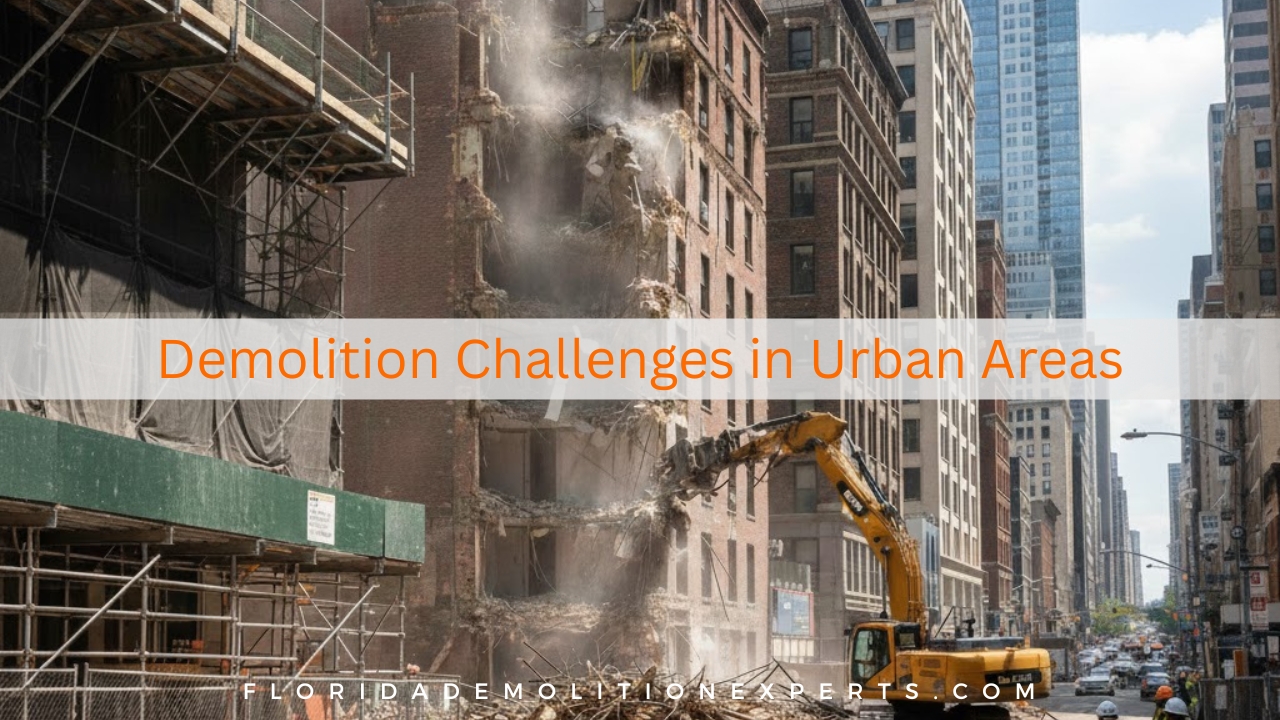
Demolition in urban areas is never as straightforward as knocking down a structure and hauling away debris. City environments come with tight working spaces, packed streets, active businesses, underground utilities, and strict regulations. Every decision made on a demolition site must balance safety, precision, noise control, and minimal disruption to the surrounding community.
Working in a confined urban setting requires advanced planning, specialized equipment, highly trained crews, and a deep understanding of engineering and city infrastructure.
Below, we’ll explore the most significant challenges demolition teams face and how professional demolition experts overcome them with modern solutions.
1. Limited Space for Machinery and Movement
One of the most defining challenges of urban demolition is restricted workspace. Unlike open suburban or rural sites, city structures are squeezed between neighboring buildings, streets, and pedestrian pathways.
Why It’s a Challenge
- Large machinery cannot freely maneuver.
- Tight areas increase the risk of damaging adjacent structures.
- Materials and equipment storage is minimal.
- Workers often operate within inches of active public spaces.
How Experts Solve It
- Using compact, high-precision equipment such as mini-excavators and robotic demolition machines.
- Scheduling staged demolition to remove sections in controlled sequences.
- Employing structural scanning tools to plan the safest approach.
- Using cranes for vertical removal when horizontal access is impossible.
Urban demolition becomes an exercise in strategic engineering rather than brute force.
2. Protecting Nearby Structures and Infrastructure
In cities, buildings share walls, foundations run deep and interconnected, and utilities like gas, water, and electrical lines run beneath nearly every sidewalk.
Risks Include
- Vibrations are causing cracks in neighboring buildings.
- Accidental utility damage leading to outages or safety hazards.
- Undermining shared foundations.
Professional Solutions
- Pre-demolition structural assessments.
- Vibration monitoring systems to ensure safe limits.
- Hand-tool dismantling for areas requiring delicate precision.
- Installing temporary shoring and bracing to stabilize surrounding structures.
The goal is to remove one building while keeping everything around it fully functional and safe.
3. Noise, Dust, and Environmental Restrictions
City residents and businesses expect minimal disturbance even when a central building is being demolished next door.
Regulation Challenges
- Strict noise ordinances.
- Dust control requirements.
- Municipalities enforce limited working hours.
- Waste-disposal rules require recycling materials.
How These Challenges Are Managed
- Using water mist systems to control dust emissions.
- Selecting low-noise machinery and scheduling loud work during approved hours.
- Installing acoustic barriers to minimize disturbance.
- Recycling concrete, metal, and other materials to comply with green building practices.
Urban demolition must be environmentally responsible and community-friendly.
4. Traffic and Pedestrian Safety Concerns
In urban demolition, the site doesn’t just affect the workers; it affects the entire neighborhood.
Real-World Challenges
- Streets may need partial closures.
- Pedestrians must be kept away from hazards.
- Material-hauling trucks must navigate congested roads.
- Any mismanagement can create safety risks and legal issues.
Effective Solutions
- Developing detailed traffic control plans.
- Setting up physical barriers, fencing, and covered walkways.
- Scheduling debris removal during off-peak hours.
- Coordinating closely with city transportation departments.
City demolition requires a perfect blend of engineering and public safety management.
5. Working Around Active Businesses and Residents
Urban demolition often occurs while nearby buildings remain occupied. That means:
Challenges
- Minimizing vibrations that disturb tenants.
- Maintaining safe access to surrounding properties.
- Preventing debris from impacting daily activities.
- Keeping essential utilities active.
Professional Strategies
- Night or weekend demolition when needed.
- Communicating clearly with residents and business owners.
- Using scaffolding, debris nets, and protective shielding.
- Monitoring air quality, noise, and vibrations continuously.
Urban demolition is as much about people management as it is about structural dismantling.
6. Compliance With Complex Regulations
Urban demolition is heavily regulated, requiring multiple permits and inspections.
Common Regulatory Requirements
- Environmental assessments for asbestos and lead.
- Engineering reviews.
- Public safety permits.
- Waste management and recycling documentation.
- Noise and dust control compliance.
How Professionals Handle It
- Assigning regulatory specialists to handle permits.
- Ensuring all workers meet OSHA and local safety standards.
- Conducting site audits throughout the demolition process.
Proper documentation and compliance help avoid costly delays and legal issues.
7. Using Technology
Modern demolition companies rely on advanced tools to improve safety and precision.
Key Technologies
- 3D building scanning to map interior structures.
- Drones to survey rooftops and tight spaces.
- Robotic demolition machines for high-risk zones.
- Real-time monitoring sensors for noise, vibration, and dust.
Technology helps demolition teams plan with greater accuracy, reduce risk, and operate more efficiently in confined urban settings.
Conclusion
Demolition in tight urban spaces is a complex, highly technical process that requires expert planning, specialized equipment, and strict compliance with city regulations.
From maneuvering machinery in tight spaces to protecting surrounding buildings and minimizing disruptions, demolition professionals must combine engineering expertise with creative problem-solving.
Urban demolition is not just about tearing structures down; it’s about doing it safely, efficiently, and responsibly, even when space is minimal.
Need Safe, Professional Demolition in Florida?
Whether you’re handling a commercial teardown, residential demolition, or site clearing in a crowded urban area, you need specialists who can manage every challenge from tight access to strict regulations.
👉 Hire trusted Florida Demolition Experts for safe, precise, code-compliant demolition services.
Contact us today for a free consultation and site assessment.