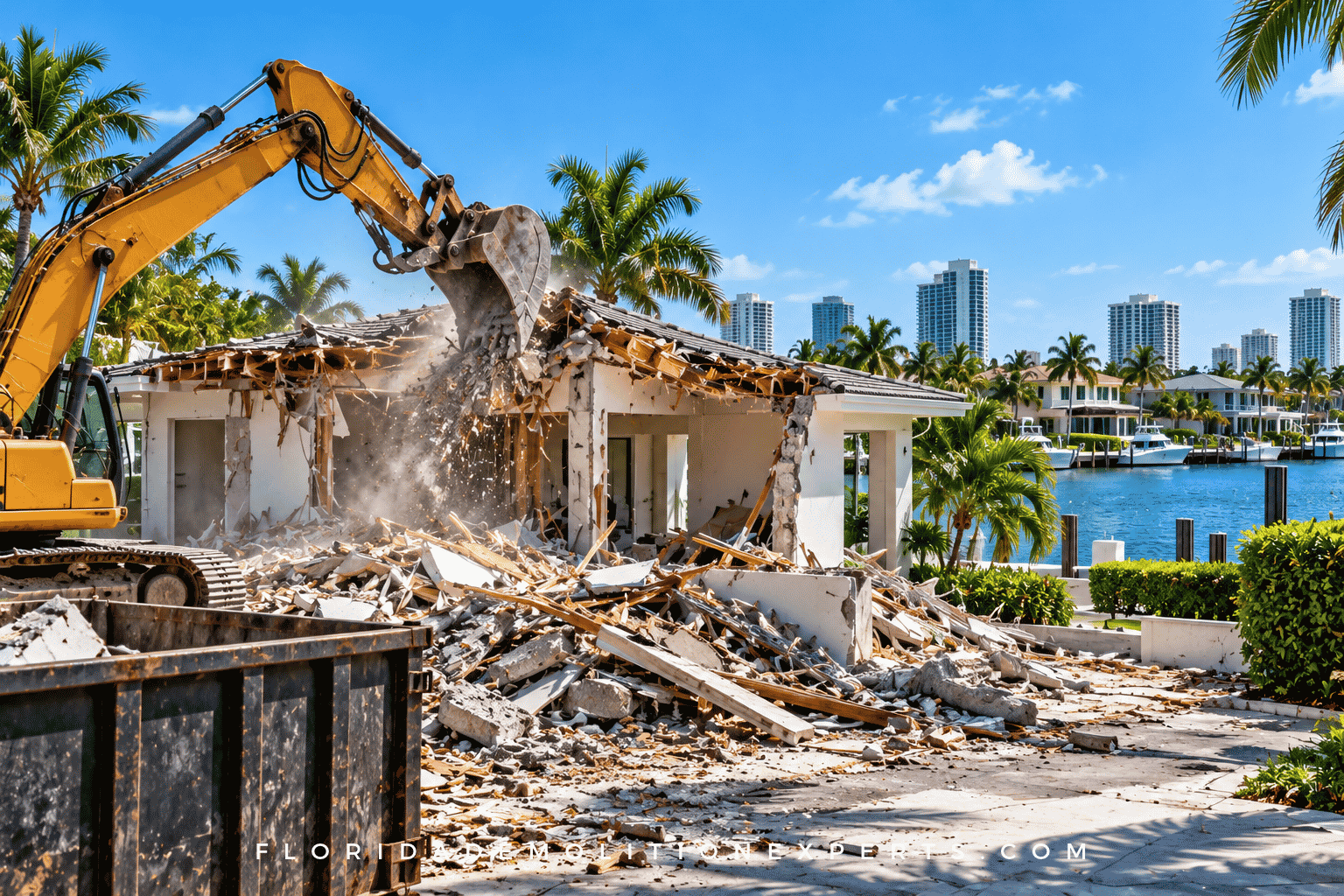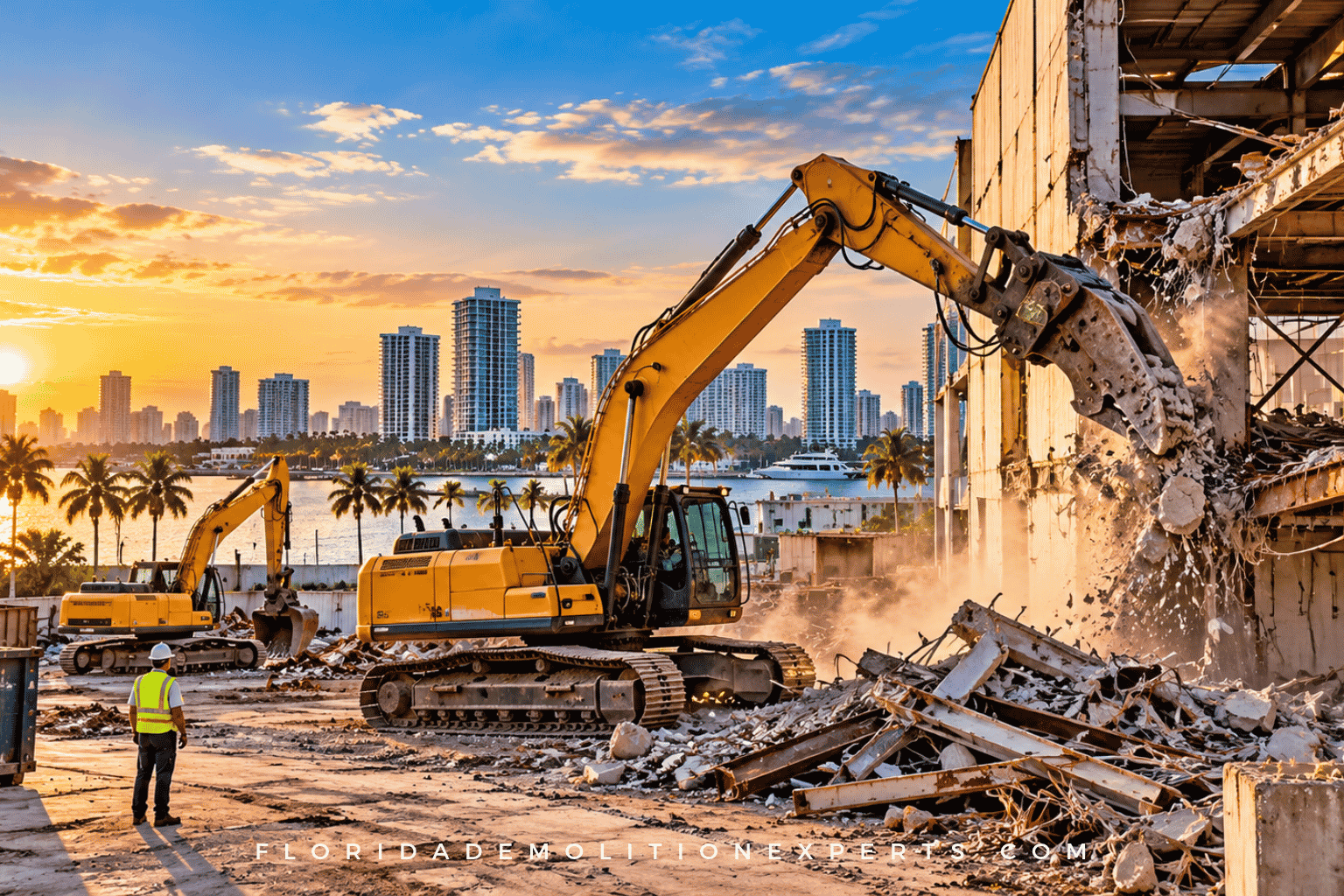

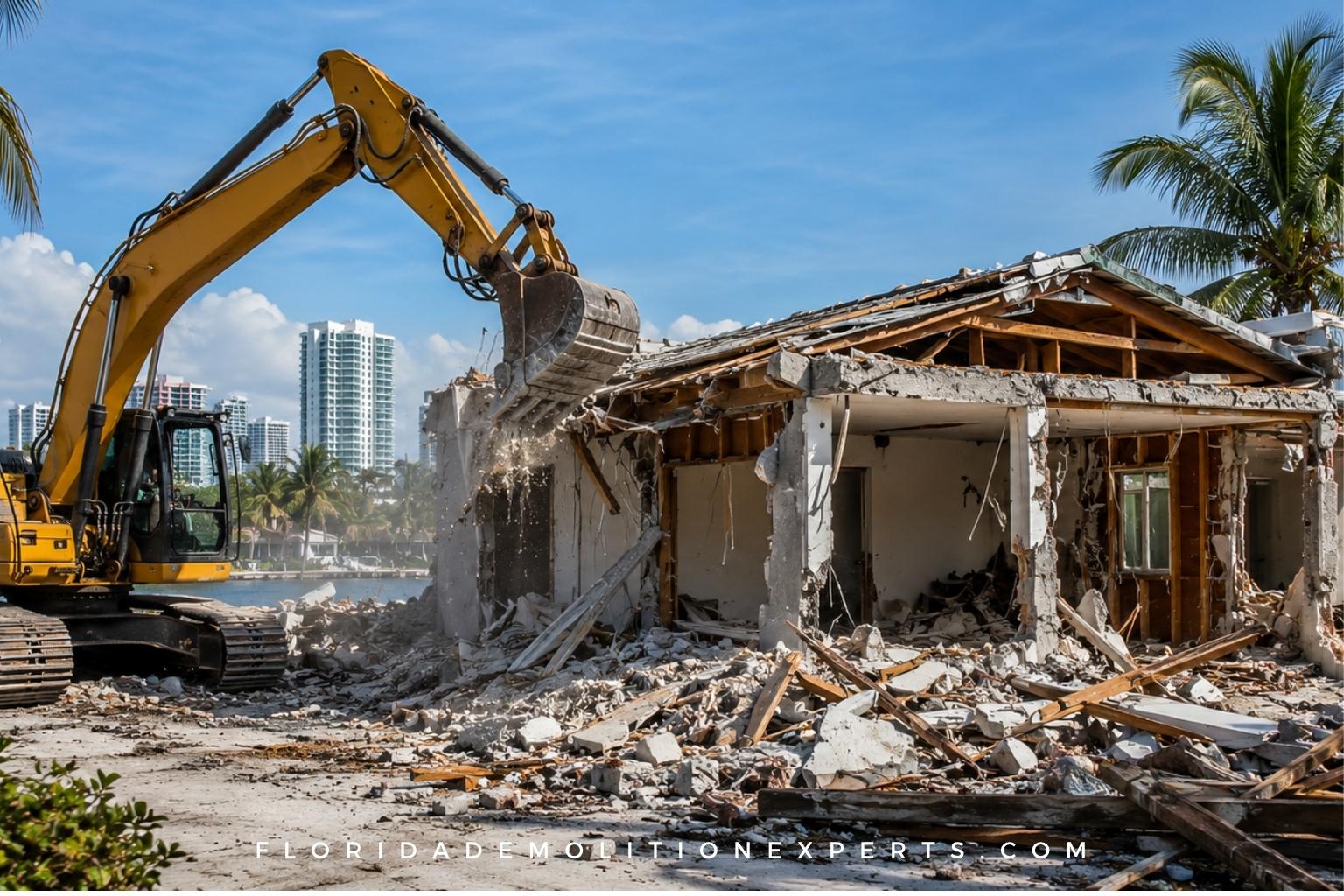
Fort Lauderdale homeowners hire licensed demolition contractors when a structure is too damaged, too old, or too unsafe to renovate.
From hurricane-damaged homes in Rio Vista to aging CBS block teardowns in Victoria Park, professional demolition is the first step in rebuilding safely and legally in Broward County.
Why Are So Many Fort Lauderdale Homes Being Demolished Right Now?
Fort Lauderdale’s housing stock is aging fast. A large share of residential properties in neighborhoods like Coral Ridge, Tarpon River, Lauderdale Isles, and Victoria Park were built between 1950 and 1975, with CBS block construction that predates modern hurricane codes, modern electrical standards, and modern plumbing materials.
These homes are reaching the end of their useful life at the same time the Fort Lauderdale real estate market is pushing land values high enough that teardown and rebuild makes more financial sense than renovation.
When the cost of bringing a 1960s CBS block home up to current Florida Building Code exceeds the cost of a new build, demolition is the logical decision, and it is happening at scale across Broward County’s older neighborhoods.
When Does an Aging Fort Lauderdale Home Need to Be Demolished Rather Than Renovated?
Demolition is the right choice when renovation costs exceed the value the work would add, or when the structure has deteriorated beyond safe repair.
Licensed contractors and structural engineers assess four key conditions: foundation integrity, structural wall condition, roof system condition, and the presence of hazardous materials.
In Fort Lauderdale’s older CBS block homes, all four frequently appear together. A foundation that has shifted due to South Florida’s high water table, walls with decades of moisture intrusion and hidden mold, a roof system that predates post-Andrew 1992 hurricane strap requirements, and asbestos in the floor tiles and drywall compound when these conditions combine, full demolition and rebuild is consistently more cost-effective than selective renovation.
Understanding the difference between interior and exterior demolition helps homeowners decide which scope their project actually requires before getting quotes.
How Does Hurricane Damage Trigger Demolition Needs in Fort Lauderdale?
Hurricane damage in Fort Lauderdale frequently crosses the threshold that makes a structure legally unrepairable under current code. Florida Building Code Section 706 defines substantial damage as repair costs exceeding 50 percent of the structure’s market value.
When a storm-damaged home hits that threshold, it must be brought into full compliance with current wind load and flood elevation requirements, which often makes demolition and rebuild the only practical path forward.
Fort Lauderdale’s FEMA flood map places many waterfront neighborhoods, including Rio Vista, Lauderdale Isles, and parts of Tarpon River, in AE and VE flood zones.
In these zones, post-damage reconstruction must meet FEMA’s Base Flood Elevation requirements, which frequently means elevating the new structure several feet above grade. Demolishing the existing slab and rebuilding to the correct elevation is the required starting point.
For a full breakdown of what the demolition permit process looks like before any post-hurricane rebuild, our guide to Broward County demolition regulations covers the permit, debris, and timeline requirements.
What Happens When Fort Lauderdale Declares a Property Condemned?
A condemned property in Fort Lauderdale is one that the City of Fort Lauderdale Building Services Department has deemed unsafe for occupancy. Condemnation occurs when a structure has sustained structural damage, has unresolved code violations, or poses an immediate safety hazard to occupants or neighbors.
Once condemned, the property owner receives a Notice of Unsafe Structure from the City of Fort Lauderdale. The owner must either repair the structure to meet current code within the timeframe specified in the notice, or demolish it.
If neither happens, the city can contract the demolition and charge the cost to the property through a lien. Acting quickly with a licensed demolition contractor is always less expensive than allowing the city to proceed. Knowing what to do before any demolition project starts covers the permit and notification process that follows a condemnation notice.
Why Do Fort Lauderdale Homeowners Need Pool Removal and Concrete Demolition?
Pool removal is one of the most common demolition requests in Fort Lauderdale. Aging pools develop structural cracks, failed plumbing, and deteriorated decking that make them expensive to maintain and a liability if left unused. Removing a pool also frees up yard space and can increase the property’s value for buyers who do not want pool maintenance costs.
In Broward County, pool demolition requires a permit through the Broward County Permitting Division. The two standard methods are full removal, breaking up and removing the entire shell, and partial removal (pool fill-in), where the shell is punctured for drainage and filled with clean fill material.
Full removal is required if the property is being redeveloped. Partial removal is more common for homeowners who want the space back. Concrete driveway and slab removal follows the same permit and disposal rules under Florida Administrative Code 62-701.
What Asbestos Risks Exist in Pre-1981 Fort Lauderdale Homes?
Any Fort Lauderdale home built before 1981 is a potential asbestos site. Federal NESHAP regulations under 40 CFR Part 61, Subpart M require a licensed asbestos inspector to survey any pre-1981 structure before demolition begins. This is a federal requirement, not optional and not waivable.
Asbestos was used in vinyl floor tiles, drywall joint compound, pipe insulation, popcorn ceilings, and roof shingles across Fort Lauderdale’s 1950s-1970s housing stock.
A licensed abatement contractor must remove confirmed asbestos before demolition proceeds. Disturbing it without abatement releases fibers that cause mesothelioma, an incurable cancer with a latency period of 20 to 50 years.
If asbestos is found during the pre-demolition inspection, our guide on handling asbestos before demolition explains the abatement and scheduling process step by step.
Does Fort Lauderdale Require a Tree Removal Permit Before Demolition?
Yes. The City of Fort Lauderdale’s tree protection ordinance requires a tree removal permit before any tree on a residential or commercial property is removed as part of a demolition or construction project.
The permit is applied for through the City of Fort Lauderdale Development Services Department and requires a site plan showing the location, species, and diameter of trees to be removed.
Removing trees without a permit in Fort Lauderdale results in fines and can require replacement plantings at a ratio set by the city.
This permit must be obtained before demolition begins, not as an afterthought, because the tree removal is typically part of the site prep sequence that allows equipment access and sets up the demolition work area.
Why Is DIY Demolition a Bad Idea for Fort Lauderdale Homeowners?
DIY demolition in Fort Lauderdale creates permit violations, asbestos exposure risks, structural collapse hazards, and plumbing damage that cost significantly more to remediate than hiring a licensed contractor from the start.
Florida Building Code Section 105.1 requires a demolition permit for any structure, and most Fort Lauderdale projects require a licensed contractor to pull the permit and perform the permitted work.
The specific risks in Fort Lauderdale’s older housing stock post-tension slabs, CBS block shared walls, aluminum wiring, asbestos floor tiles, and hurricane strap connections that must be properly sequenced during teardown make this a project where DIY attempts consistently result in emergency calls and cost overruns.
A full breakdown of why DIY demolition is dangerous in Florida covers every risk category with the specific Florida regulatory context that applies.
What Should Fort Lauderdale Homeowners Expect From a Licensed Demolition Contractor?
A licensed demolition contractor in Fort Lauderdale handles every step from pre-demolition survey to final inspection sign-off. That includes pulling the permit from the Broward County Permitting Division, coordinating utility disconnects with FPL and the city water department, arranging the asbestos inspection for pre-1981 structures, managing dust control per FAC 62-296.320(4)(c), and disposing of all C&D debris at a licensed Broward County facility per FAC 62-701.
According to FEMA’s Homeowner’s Guide to Retrofitting, proper demolition and site preparation is the foundation of every successful rebuild in a flood zone, and getting it wrong creates compliance problems that delay the rebuild permit.
FAQ’s
Do I need a permit for demolition in Fort Lauderdale?
Yes. Florida Building Code Section 105.1 requires a demolition permit for any structure in Fort Lauderdale. Permits are issued through the Broward County Permitting, Licensing and Consumer Protection Division.
Work cannot legally begin until the permit is approved and posted on site. Processing typically takes 5 to 15 business days.
How much does home demolition cost in Fort Lauderdale?
Residential demolition in Fort Lauderdale typically ranges from $8,000 to $25,000 for a standard single-family home, depending on size, construction type, hazmat findings, and site access.
Asbestos abatement, pool removal, and tight-lot equipment constraints can add to the base cost. Always get an itemized quote that includes permit fees and debris disposal.
Can a hurricane-damaged home in Fort Lauderdale be demolished and rebuilt?
Yes, and in many cases it is required. Under Florida Building Code Section 706, if repair costs exceed 50 percent of the structure’s market value, the rebuilt structure must meet current code, including wind load and flood elevation requirements.
In FEMA AE and VE flood zones, this typically means demolishing the existing slab and rebuilding at a higher elevation.
How long does demolition take in Fort Lauderdale?
Physical demolition of a standard Fort Lauderdale single-family home takes 2 to 5 days for a licensed crew. Add 5 to 15 business days for permit processing before work can legally start, and additional time if asbestos abatement is required. Full project timeline from contract to cleared site is typically 3 to 6 weeks.
How do I find a licensed demolition contractor in Fort Lauderdale?
Verify the contractor’s Florida state license through the Department of Business and Professional Regulation at myfloridalicense.com. Confirm they carry liability insurance and workers’ compensation coverage.
Florida Demolition Experts holds License #86-4496-D X, verifiable through the DBPR database, and serves Fort Lauderdale and all of Broward County.
Ready to Start Your Demolition Project?
If you’re planning a renovation, rebuild, or property upgrade, don’t take demolition risks.
👉 Contact Florida Demolition Experts today for a free consultation and site evaluation.