
Demolition damage to a neighboring property is uncommon when a licensed contractor follows standard procedure, but the risk is real enough that Florida insurance practice treats it seriously.
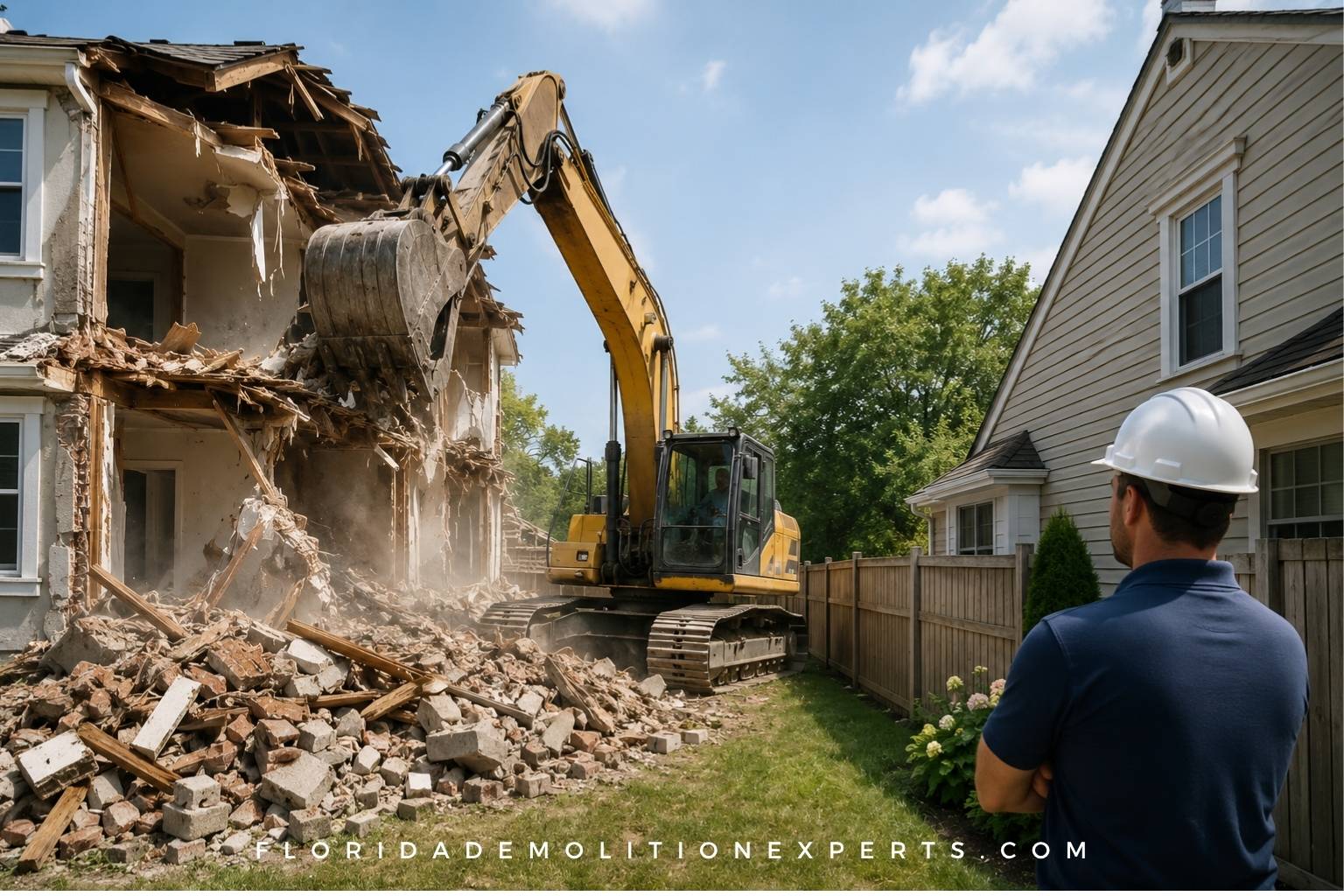
Vibration, falling debris, and heavy equipment operating close to a property line are the most common causes of damage to an adjacent structure during demolition.
A licensed contractor reduces this risk through controlled demolition methods, pre-project documentation, and general liability insurance that covers third-party property damage if something does go wrong.
Who Is Liable If Demolition Damages a Neighbor’s Property in Florida?
The demolition contractor is typically liable for damage their work causes to an adjacent property, provided the work was within their control, and the damage resulted from negligence or improper procedure.
This is why every licensed Florida demolition contractor carries general liability insurance specifically covering third-party property damage.
Liability shifts in three situations:
- If the property owner hired an unlicensed or uninsured contractor, the owner may be held personally liable.
- If pre-existing damage is later misattributed to the demolition, documented before-and-after photos resolve the dispute.
- If the damage resulted from an act outside the contractor’s control (severe weather, a structural failure unrelated to the demolition work itself)
How Common Is Neighbor Property Damage During Demolition?
Damage claims tied to demolition are uncommon when a licensed contractor follows standard procedure.
Still, South Florida’s tight lot sizes in older neighborhoods, including the kind of close-set lots covered in our guide on demolishing a house in South Florida with tight property lines, raise the baseline risk compared to suburban demolition elsewhere in the state.
What Does Demolition Insurance Actually Cover for Neighbor Damage?
A licensed demolition contractor’s general liability insurance policy typically covers:
- Structural damage to adjacent buildings caused by the contractor’s work
- Damage to fences, landscaping, driveways, or other property improvements
- Damage to vehicles or personal property located on the neighboring lot during active work
- Legal defense costs if a damage claim is disputed
What it typically does not cover:
- Pre-existing damage that existed before the project began
- Damage caused by a separate, unrelated event (storm damage, a prior structural issue)
- Damage to a project where the contractor was operating without a valid license or permit
Ask any contractor for a certificate of insurance naming the coverage limits before work begins. A reputable contractor provides this without hesitation.
How Do Contractors Document Neighboring Properties Before Demolition?
Pre-demolition documentation protects everyone involved, including the neighbor. Standard practice includes:
Step 1: Photograph and video the exterior of the adjacent property
This includes foundations, walls, fences, and any visible existing cracks or damage, dated and time-stamped.
Step 2: Notify the neighboring property owner in writing
A simple notice of upcoming demolition work, including the expected timeline, reduces disputes and builds goodwill. Florida does not always require this formally, but it remains best practice statewide, as covered in our breakdown of whether you have to notify your neighbors before demolition in Florida.
Step 3: Walk the shared property line with the neighbor if possible
This creates a mutual record of the property’s pre-existing condition and gives the neighbor a chance to flag concerns before work starts.
Step 4: Install vibration monitoring on tight-lot projects
For demolitions occurring within a few feet of an adjacent structure, vibration monitors provide a real-time, documented record that work stayed within safe thresholds.
According to the Insurance Information Institute, third-party property damage claims tied to construction and demolition activity are among the more frequent sources of contractor liability disputes nationally, which is exactly why documented vibration monitoring and pre-project photo records carry real weight if a claim is ever filed.
Step 5: Keep records for the duration of the project and after.
Documentation should be retained well past project completion in case a delayed damage claim surfaces.
Understanding Demolition Setback and Equipment Proximity Rules
Setback requirements for demolition equipment vary by municipality and lot configuration, but most South Florida jurisdictions expect contractors to maintain enough clearance to prevent debris, vibration, or equipment contact from reaching neighboring property.
On especially tight lots common in Fort Lauderdale’s older canal neighborhoods, contractors often substitute smaller equipment or hand demolition methods near the property line, the same clearance discipline we walk through in our broader demolition safety tips for homeowners.
Does Demolition Risk to Neighbors Vary by South Florida County?
Broward County
Broward County building departments do not typically mandate vibration monitoring by code. Still, insurers and contractors use it voluntarily on tight-lot projects to limit liability exposure, as detailed in the same regulatory landscape in our Broward County demolition regulations guide.
Palm Beach County
Palm Beach County’s mix of dense older neighborhoods and newer, larger-lot developments means risk varies significantly by specific location.
A contractor familiar with the specific neighborhood’s lot history is an asset here, since the same liability principles apply countywide. Still, the practical exposure depends entirely on how close the structures actually sit.
What Should You Do If You Believe Demolition Damaged Your Property?
If you are a neighbor and believe a demolition project damaged your property:
- Document the damage immediately with photos and video, including the date
- Contact the demolition contractor directly and request their certificate of insurance
- File a claim with the contractor’s insurance carrier if damage is confirmed and not resolved informally
- Avoid making repairs before the damage is documented and the claim is filed, as this can complicate the insurance review
FAQ’s
Does it matter if the demolition is happening on my property or my neighbor’s when assessing risk?
Yes, in a practical sense. If the demolition is on your property, you control the contractor selection and can verify insurance and documentation practices directly.
If a neighbor is demolishing next door, you have less control and should request their contractor’s certificate of insurance and document your own property’s condition independently before work begins.
Who pays if a demolition contractor damages my property in Florida?
The demolition contractor’s general liability insurance typically covers damage caused by their work. If the property owner hired an unlicensed or uninsured contractor, the owner may bear personal financial responsibility instead.
Should I get my own inspection before my neighbor’s demolition project starts?
Yes, if you have concerns. Documenting your property’s condition independently before a neighboring demolition begins protects you in case a dispute later arises over what damage existed beforehand versus what occurred during the project.
Does homeowners’ insurance cover damage caused by a neighbor’s demolition project?
Typically no. Damage caused by a third party’s negligence, such as a neighboring demolition contractor, is generally the responsibility of that contractor’s liability insurance, not your own homeowners policy. Your insurer may require you to pursue the responsible party’s coverage first.
How do I know if a demolition contractor has adequate insurance before they start work next door?
You can request a certificate of insurance from the contractor or property owner. A reputable contractor will provide proof of general liability coverage without resistance.
If you cannot obtain this information, contact your local building department to confirm the project has a valid permit on file.
Can vibration from demolition equipment cause structural damage even without direct contact?
Yes, in some cases, particularly on tight lots with older foundations or structures already showing signs of wear. This is why vibration monitoring is standard practice on close-proximity demolition projects, providing documented proof of vibration levels throughout the work.
What happens if damage is discovered weeks after a demolition project is finished?
Delayed damage claims are harder to resolve because more time has passed, and other factors could have contributed. This is why documentation taken during and immediately after the project matters.
If you suspect delayed damage, document it as soon as it is discovered and contact the contractor promptly, rather than waiting.
Florida Demolition Experts Protect Your Project and Your Neighbors
Every project we manage in Fort Lauderdale, Broward, and Palm Beach counties includes pre-demolition documentation of adjacent properties, full general liability insurance, and controlled demolition methods on any tight-lot project.
If you are worried about how a demolition project might affect a neighboring property, whether it is yours or theirs, we will walk you through exactly how we protect everyone involved before a single piece of equipment arrives on site.
Contact us to get a free estimate for your demolition project.