
The most common materials in Fort Lauderdale demolition projects are CBS block, poured concrete, steel, rebar, wood framing, drywall, roofing materials, and glass. Older structures built before 1980 also contain asbestos, lead-based paint, and mold that require licensed abatement under NESHAP 40 CFR Part 61 and FAC 62-257 before mechanical demolition begins.
What Building Materials Are Most Common in Fort Lauderdale Demolition Projects?
Fort Lauderdale commercial demolition and residential projects involve a different mix of materials than most of the country. CBS block dominates both residential and commercial construction in Broward County, unlike wood-frame markets in the Southeast and Midwest.
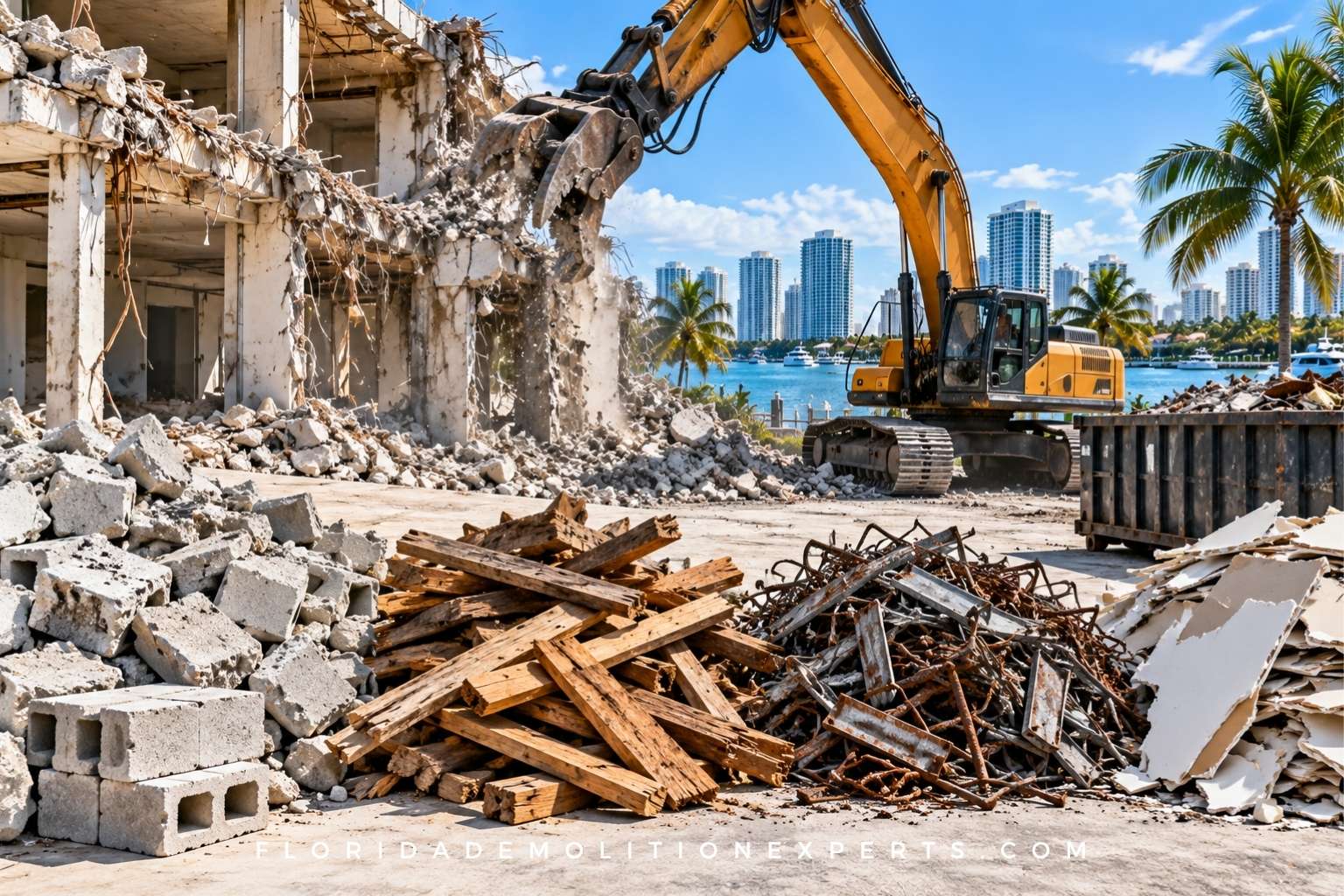
The standard material categories on a Fort Lauderdale demolition project:
- CBS block (concrete masonry units): exterior and interior walls, load-bearing partitions
- Poured concrete: slabs, foundations, driveways, parking structures
- Steel and rebar: post-tension cables, structural beams, column reinforcement
- Wood: roof decking, interior framing, flooring in pre-1980 structures
- Drywall and plaster: interior walls and ceilings
- Roofing materials: concrete tile, asphalt shingle, modified bitumen membrane
- Glass: windows, storefronts, curtain walls
- Asphalt: parking lots, driveways, loading areas
Each material stream requires separate handling, equipment, and FAC 62-701 disposal documentation before you can close out a Fort Lauderdale or Broward County demolition permit.
What Is CBS Block and Why Does It Affect Demolition in Broward County?
CBS block is the single most important material to understand on any Fort Lauderdale demolition project. It determines equipment selection, debris volume, disposal cost, and project timeline before a permit is filed.
CBS Block Wall and Slab Construction
Concrete block and stem wall construction is the standard in South Florida because of hurricane wind-resistance requirements under the Florida Building Code. CBS block walls are solid masonry units bonded with mortar and reinforced with steel rebar in the cores.
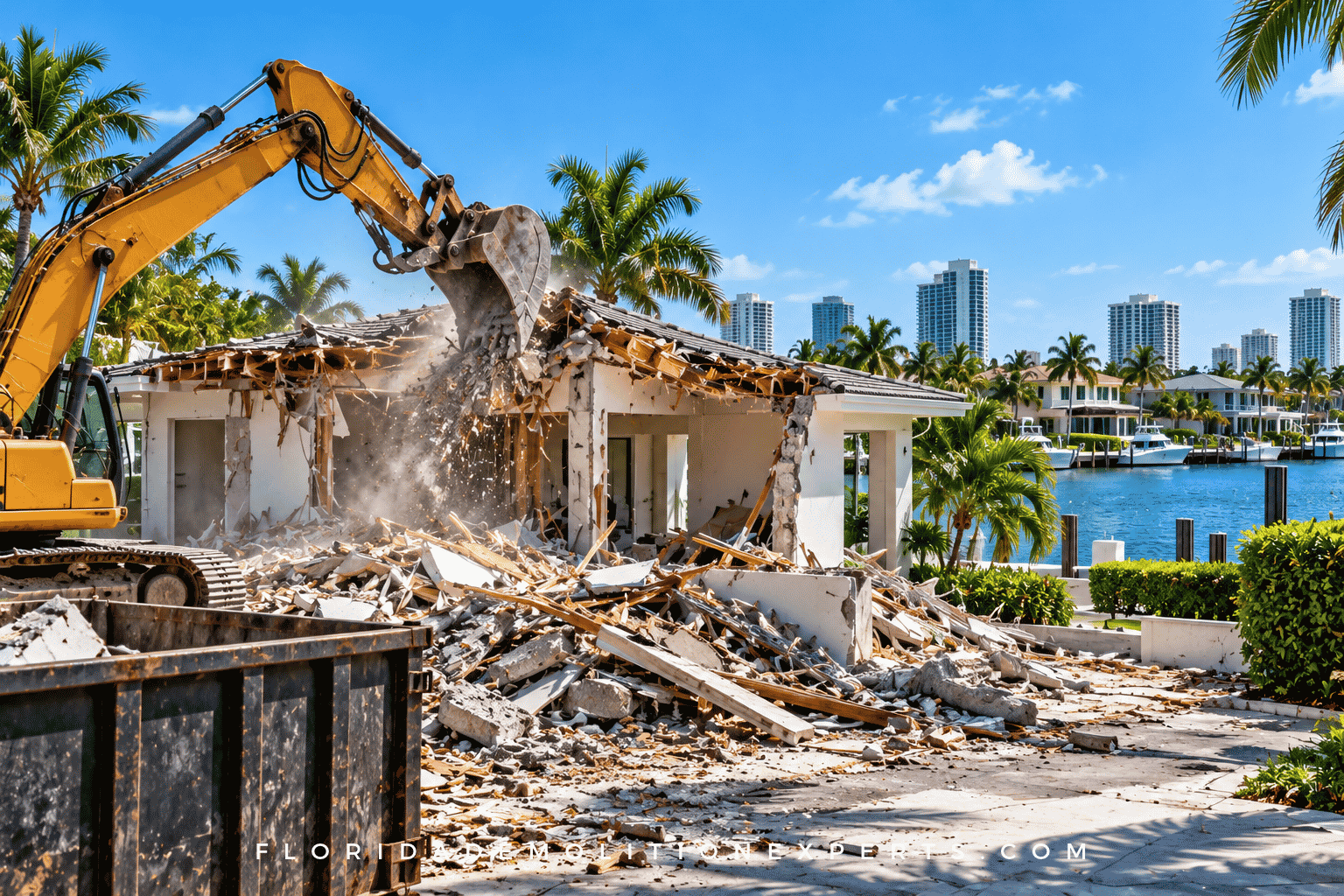
They do not disassemble the way wood-frame walls do. Mechanical excavators with hydraulic breaker attachments are required to break CBS block, not hand tools or light equipment.
Post-tension concrete slabs are common in Fort Lauderdale commercial CBS block structures. A structural engineer must identify active post-tension cables and manage them before any saw cutting begins.
Cutting a tensioned cable releases stored energy that can cause structural collapse and serious injury. A structural assessment before Fort Lauderdale commercial demolition costs $3,000 to $8,000 and is required before mechanical work begins on any post-tension structure.
Debris Volume and Disposal Cost
A 1,500 sq ft CBS block residential home in Fort Lauderdale generates 60 to 100 tons of concrete debris. A wood-frame home of the same size generates 15 to 25 tons.
That volume difference directly affects the number of debris haul cycles, equipment rental duration, and FAC 62-701 disposal cost.
CBS block debris disposal at a licensed Broward County facility runs $45 to $65 per ton at a general landfill or $10 to $25 per ton at a licensed aggregate recycling facility. The choice of facility can affect total project cost by $2,000 to $5,000 for a standard residential demolition.
What Equipment Breaks and Removes Concrete on Fort Lauderdale Demolition Sites?
Hydraulic breaker attachments on excavators are the primary tool for CBS block and poured concrete demolition in Fort Lauderdale. Jackhammers and pneumatic chisels handle precision work near utility lines, foundation edges, and areas adjacent to structures being preserved.
Concrete saws with diamond blades cut control joints and separation lines before hydraulic breaking begins. This controls where cracks propagate and prevents damage to adjacent slabs, curbs, or neighboring structures.
Manual versus mechanical demolition methods for CBS block in Broward County affect both equipment costs and debris-volume management on residential projects.
How Is Steel and Rebar Handled During Commercial Demolition in Fort Lauderdale?
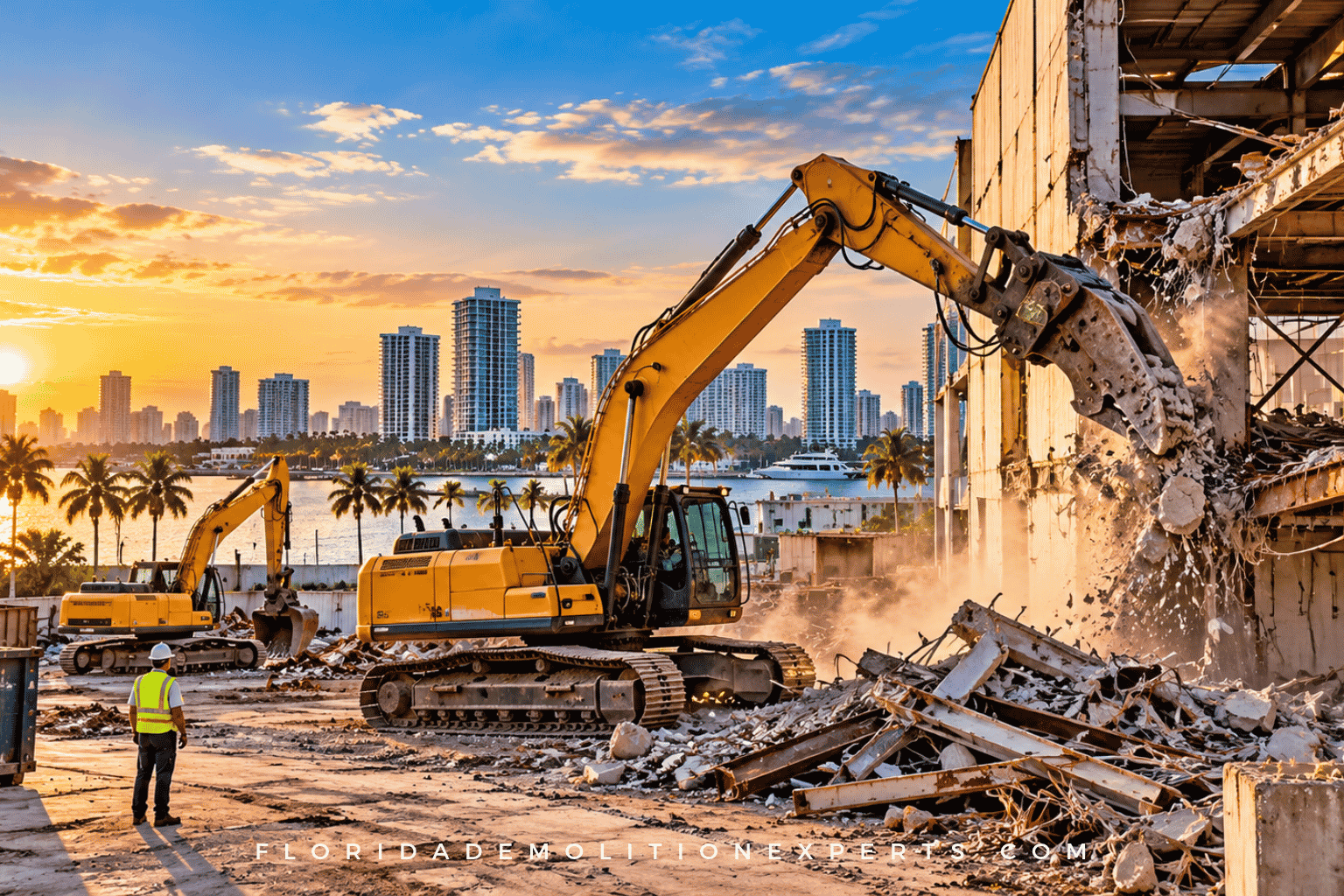
Steel structural elements in Fort Lauderdale commercial buildings include beams, columns, roof joists, and post-tension reinforcement in concrete slabs. Each requires different handling depending on whether it is active under tension or passive in the structure.
Hydraulic shears attached to excavators cut structural steel beams and columns after relieving the load-bearing elements. Oxy-acetylene torches provide precision cuts on steel in tight spaces or where shear access is limited.
Rebar pulled from crushed CBS block is sorted on site and sold to scrap metal dealers at $100 to $250 per ton depending on grade and current market pricing.
Steel recovery from a Fort Lauderdale commercial demolition reduces the FAC 62-701 regulated waste volume. A 10,000 sq ft CBS block commercial structure typically yields 5 to 15 tons of recoverable steel depending on structural system type and reinforcement density.
What Dust Control Materials Are Required on Fort Lauderdale Demolition Sites?
OSHA 29 CFR 1926.1153 sets the permissible silica exposure limit at 50 micrograms per cubic meter as an 8-hour time-weighted average.
CBS block and poured concrete demolition in Fort Lauderdale exceeds this threshold without active dust suppression in place from day one of mechanical work.
FAC 62-296.320(4)(c) authorizes Florida DEP to fine $1,000 per day for visible dust emissions leaving a Fort Lauderdale demolition site boundary.
In Broward County’s dense commercial areas, a single complaint from a neighboring business triggers a Florida DEP inspection within 24 to 48 hours.
Required dust control materials on a Fort Lauderdale demolition site: water misting systems mounted on equipment booms, hose lines for manual suppression during breaking, wet cutting equipment on all concrete saws, perimeter containment barriers, and site boundary air monitors on commercial projects with adjacent occupied buildings.
Dust control protocols and regulatory requirements for Fort Lauderdale demolition sites must be operational before the first piece of equipment engages the structure.
What Hazardous Materials Are Found in Older Fort Lauderdale Buildings?
Structures built before 1980 in Broward County frequently contain three regulated hazardous materials that require licensed removal before any demolition begins.
A pre-demolition hazardous materials survey is required as a permit attachment at both LauderBuild and the Broward County Building Division.
Asbestos
Asbestos is present in floor tiles, pipe insulation, roof shingles, drywall joint compound, and exterior siding in pre-1980 Fort Lauderdale structures. NESHAP 40 CFR Part 61 requires a 10-working-day written notification to Florida DEP before demolition of any regulated structure containing asbestos-containing material.
FAC 62-257 requires a licensed asbestos inspector to survey the structure and produce a written report before filing the permit application. Mechanically disturbing asbestos without abatement is a federal violation with no grace period.
Lead-Based Paint
Lead-based paint is present on interior and exterior surfaces of structures built before 1978 in Broward County. EPA RRP protocols require licensed lead abatement before mechanical demolition begins on affected surfaces.
Hazardous material compliance on Fort Lauderdale commercial demolition sites covers the full regulatory sequence for asbestos, lead, and mold in one place.
Mold
Mold contamination in wall cavities and subfloor assemblies of older Fort Lauderdale structures requires a licensed mold assessor’s report before demolition begins on any building with visible mold growth exceeding 10 square feet.
Mechanically disturbing mold-affected materials distributes spores throughout the site and into adjacent structures. Submit the assessor’s report with the permit application at LauderBuild.
How Does Material Type Affect Demolition Cost and Timeline in Fort Lauderdale?
Material type is the primary driver of demolition cost variation in Fort Lauderdale, not structure size alone.
A 2,000 sq ft CBS block home costs significantly more to demolish than a 2,000 sq ft wood-frame home because of debris volume, equipment requirements, and disposal costs under FAC 62-701.
| Material Type | Debris Volume | Fort Lauderdale Disposal Cost |
|---|---|---|
| CBS block residential | 60–100 tons | $2,700–$6,500 |
| Wood-frame residential | 15–25 tons | $675–$1,625 |
| Commercial CBS block (per 10K sq ft) | 80–120 tons | $3,600–$7,800 |
Problem-Solving Angle
The wrong contractor on a Fort Lauderdale demolition project costs more than the savings on the low bid. Wrong permit office, missed NESHAP notification, unmarked post-tension cables.
Florida Demolition Experts handles every material type in Broward County from first permit to final inspection. Call (954) 444-6643 or get your free assessment online.