
License Number: 86-4496-D-X

DBA FLORIDA DEMOLITION EXPERTS

What Factors Increase Demolition Costs?

What Factors Increase Demolition Costs
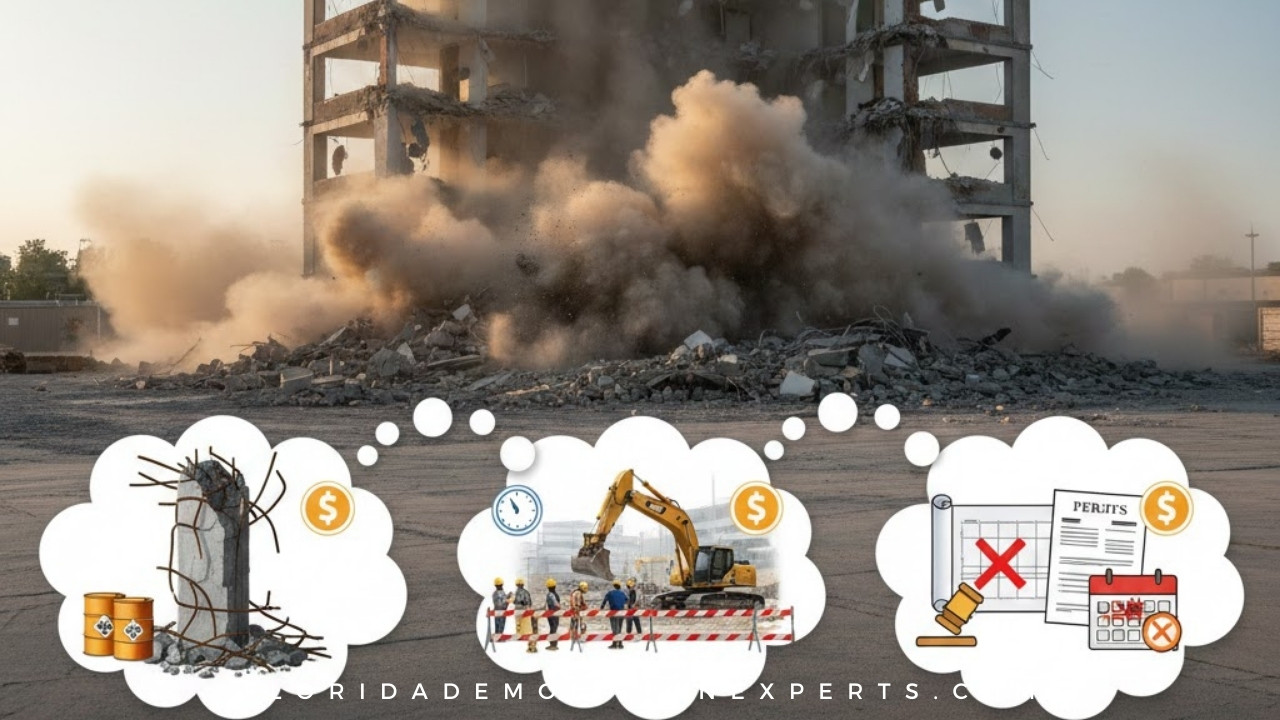
Demolition costs increase when a project involves larger or stronger structures, partial demolition requirements, hazardous materials, regulatory permits, limited site access, high debris volume, complex utility disconnections, urgent timelines, adverse weather, or elevated safety risks.
Factors that increase labour, time, equipment use, compliance effort, or liability, thereby raising the total demolition cost.

Top Factors that Increase Demolition Costs

Structure Size and Construction Materials

Demolition costs increase as structure size and material strength increase. Larger buildings require more labour, longer timelines, heavier machinery, and greater debris handling.
Concrete, masonry, and steel structures cost more to demolish than wood-frame buildings because they resist mechanical breakdown and require specialised equipment.

Partial Demolition Requirements

Partial demolition increases costs because it requires precision, structural protection, and additional safety planning.
Unlike full demolition, partial demolition must preserve remaining structural elements. This slows production, increases manual labour, and raises the cost per square foot.

Hazardous Materials Presence

Hazardous materials significantly increase demolition costs due to testing, licensed removal, and regulated disposal.
Asbestos, lead-based paint, and mould are common in older structures. In Florida, asbestos inspections are often mandatory before demolition, and abatement must be completed before structural work begins, adding to costs and delays.

Permits, Regulations, and Inspections

Demolition costs increase when permits, inspections, and regulatory approvals are required.
Permit fees, compliance documentation, and approval timelines vary by Florida city and county. Delays in regulatory processes extend labour and equipment rental periods, increasing total costs.

Site Accessibility and Location Constraints

Limited site access increases demolition costs by reducing efficiency and increasing safety controls.
Urban properties, waterfront locations, and sites near neighbouring structures restrict equipment movement and require controlled demolition methods, which add time and expense.

Debris Removal and Disposal Volume

Higher debris volume and heavier materials increase demolition costs due to transportation and disposal fees.
Concrete, masonry, and mixed materials are more expensive to haul and dispose of than wood. Florida disposal regulations and distance to approved facilities directly affect cost.

Utility Disconnections and Site Preparation

Complex utility disconnections increase demolition costs due to the need for coordination and safety requirements.
Electric, gas, water, sewer, and communication lines must be safely disconnected before demolition. Undocumented or outdated utility layouts increase labour time and preparation cost.

Project Timeline and Urgency

Urgent demolition projects cost more because they require accelerated labour and priority equipment scheduling.
Emergency demolitions after fire, storm, or structural failure often involve overtime labour and rapid mobilisation, which increases pricing.

Safety Risk Level

Higher safety risk increases demolition costs due to additional planning, monitoring, and insurance requirements.
Unstable structures, confined sites, and proximity to occupied buildings require engineered demolition plans, protective systems, and enhanced oversight.

Summary

Primary factors that increase demolition costs include:

Structure complexity, hazardous materials, regulatory requirements, limited access, debris volume, utility complexity, timeline pressure, environmental conditions, and safety risk.

Understanding these factors allows property owners to accurately estimate demolition costs and avoid unexpected expenses.

FAQs

What is the biggest factor that increases demolition costs?

Hazardous materials such as asbestos are the biggest cost driver because they require testing, licensed removal, and regulated disposal.

Is partial demolition more expensive than full demolition?

Yes. Partial demolition usually costs more per square foot due to precision work and structural protection requirements.

Do permits increase demolition costs in Florida?

Yes. Permit fees, inspections, and approval timelines increase both direct and indirect demolition costs.

Does debris removal cost extra in demolition projects?

Yes. Debris removal and disposal costs depend on material type, volume, and local disposal regulations.

Can weather affect demolition pricing?

Yes. Weather delays increase project duration, which raises labour and equipment costs.

Florida Demolition Experts – Clear Costs, No Surprises

If you are planning a demolition project in Florida, understanding cost drivers before work begins is critical.

Florida Demolition Experts provides licensed and insured demolition services across Florida, including residential, commercial, and partial demolition. Their team manages permits, compliance, debris removal, and safety planning with clear pricing and no hidden costs.

Request a professional demolition assessment today to understand your real costs before demolition begins.

Contact Florida Demolition Experts for safe, compliant, and efficient demolition services in Florida.

Share the Post:

Nataliya

CEO & Founder Florida Demolition Experts

Nataliya is the founder and owner of Florida Demolition Experts, a trusted provider of residential and commercial demolition services across Florida. With years of experience in the industry, Nataliya is passionate about delivering safe, efficient, and environmentally responsible demolition solutions. She specializes in helping homeowners, contractors, and developers navigate the demolition process with confidence and clarity.

Related Posts

Website by TAO Digital Agency