
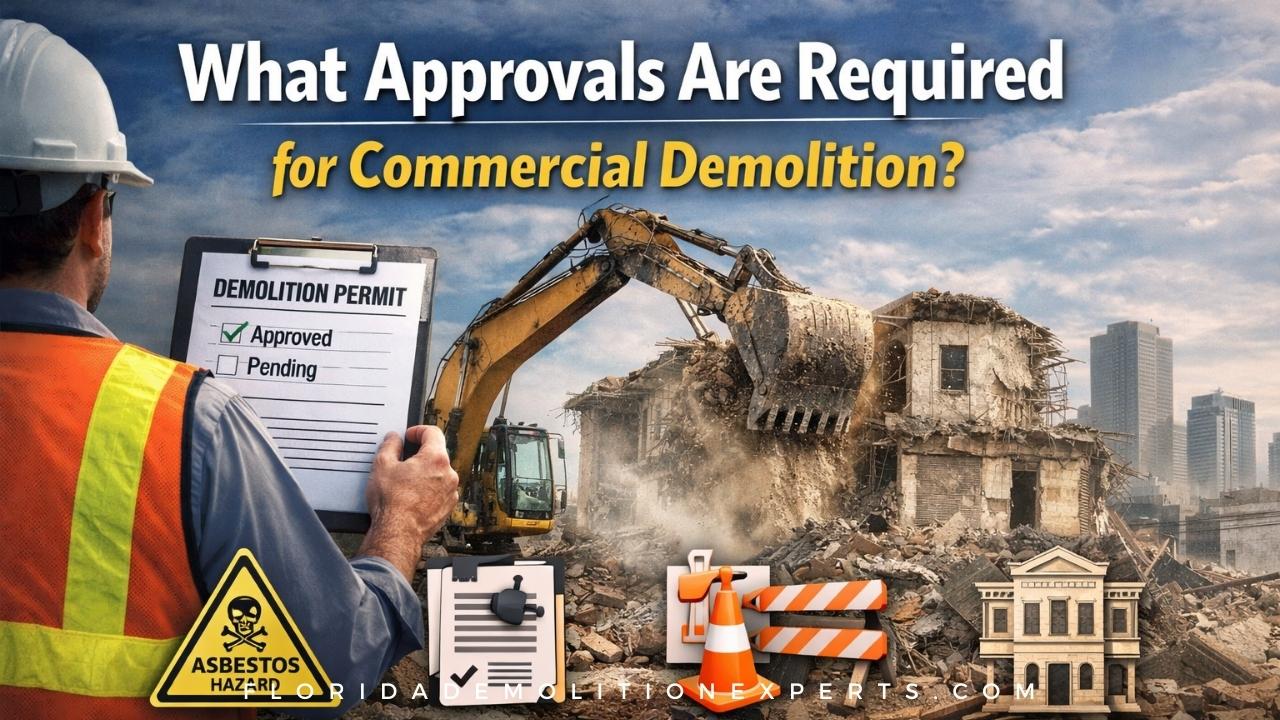
Commercial demolition approvals usually include a demolition permit from the local building department, environmental clearances (especially asbestos and lead), utility disconnect confirmations, and public-safety approvals such as traffic control or right-of-way use.
The exact list depends on your building type, location, and whether you’re doing complete, partial, or interior strip-out demolition.
Quick Answer
In most cases, you’ll need:
- A demolition permit
- Hazardous materials survey (often asbestos, sometimes lead, and others) and abatement clearance if hazards are found
- Utility disconnect letters (electric, gas, water, sewer, telecom)
- Safety controls (fencing, dust control, noise compliance)
- Right-of-way/traffic permits if you impact streets or sidewalks
- And sometimes: stormwater/erosion, fire department, historic review, or planning/zoning approvals.
1) Demolition Permit
This is the primary approval and is usually issued by your city or county building department. It’s required for most commercial demolitions, and it’s also common for structural or partial demolition work.
Here is a detailed guide about the commercial demolition permit process, what documents you’ll need, and how to avoid common approval delays. What it usually involves:
- Basic project details (address, scope, contractor info)
- Owner authorization
- Insurance proof and contractor licensing/registration requirements (varies by area)
- A site plan and demolition approach (especially for larger projects)
2) Environmental Approvals (Asbestos, Lead, And Other Hazards)
Before demolition, many commercial buildings require a hazardous materials assessment. This is where asbestos becomes the most significant factor, especially in older structures. Lead-based paint can also be a concern, along with other regulated materials, depending on what’s inside the building.
If hazards are identified, you typically need abatement by qualified teams and written clearance documentation before the demolition phase can legally proceed.
Everyday environmental items that trigger approvals:
- Asbestos-containing materials
- Lead-based paint and dust controls
- Refrigerants (HVAC systems)
- Mercury-containing devices (some older equipment)
- PCBs (specific older electrical components)
3) Utility Disconnect Approvals
Utilities usually must be disconnected, capped, or otherwise made safe before demolition begins. Permit offices often require proof (letters or confirmations) because this is one of the most common safety checkpoints.
Utilities that typically need formal disconnect confirmation:
- Electric
- Gas
- Water
- Sewer
- Telecom/fibre
4) Public Safety, Site Protection, And Worksite Controls
Most jurisdictions require demolition sites to be secured and managed to protect the public and adjacent properties. Some jobs require a formal site safety plan, especially if you’re near active businesses, pedestrians, or neighbouring buildings.
Safety controls that are commonly required:
- Fencing/barricades and secure access points
- Dust suppression (often water-based)
- Noise and work-hour compliance
- Debris management and safe loading areas
- Fire prevention measures (project-dependent)
5) Right-Of-Way And Traffic Control Permits (If You Affect Public Areas)
If your demolition needs a dumpster in the street, equipment staged near sidewalks, temporary closures, or lane restrictions, you’ll usually need separate approvals beyond the demo permit.
This is one of the most overlooked items that cause delays because these permits often require additional review.
6) Stormwater, Erosion Control, And Site Runoff
Demolition exposes soil, changes drainage, and can create runoff issues. Many Florida jobs require erosion control measures to prevent sediment and debris from entering storm drains. The level of approval depends on the site size, location, and local rules.
What may be required:
- Erosion and sediment controls (silt fencing, inlet protection, etc.)
- Stormwater compliance documentation
- Dewatering controls if water removal is needed
- Tree removal approvals in some municipalities
7) Planning, Zoning, Historic, And Special-Area Approvals (When Applicable)
Not every project needs these, but when they apply, they can be the biggest schedule driver.
You may need extra approvals if:
- The building is in a historic district or has preservation status
- You’re doing partial demolition tied to renovation or re-use
- The site is in a coastal zone, floodplain, or overlay district
- Local planning/zoning rules require a review before demo
These reviews are highly location-specific, so the safest approach is to confirm early, before you finalize timelines.
8) Waste Hauling, Disposal, And Recycling Documentation
Commercial demolition generates large volumes of debris, and many jurisdictions require proof that waste is handled legally and responsibly.
Documentation that’s commonly required or requested:
- Licensed hauling arrangements
- Disposal receipts or manifests (especially for regulated materials)
- Recycling reporting (when applicable)
- Approved disposal pathways for hazards identified during surveys
A Simple Step-By-Step Approval Process
- Define scope clearly (complete demolition, partial demolition, or interior demo).
- Order environmental surveys early (asbestos is the most common schedule bottleneck).
- Plan site safety and logistics (fencing, dust, noise, access routes, haul-off).
- Apply for the demolition permit with the required documents.
- Schedule utility disconnects and obtain written confirmations.
- Secure right-of-way/traffic permits if you’ll touch streets or sidewalks.
- Complete abatement and clearance if hazards are found.
- Start demolition only after approvals are active, and follow inspection requirements.
- Close out properly with disposal documentation and any final site requirements.
FAQs
Do you always need a demolition permit for commercial demolition?
In most cases, yes. Even partial demolition often requires permits, and interior demolition may require permits if you’re impacting structural components, life-safety systems, or MEP systems.
Is an asbestos survey required before demolition?
Frequently, yes, especially for older commercial buildings. Many areas require inspection and clearance documentation before demolition.
Can you begin demolition while permits are still in progress?
Starting early can trigger stop-work orders and significant delays. It also increases liability exposure, especially if environmental requirements weren’t completed first.
What usually causes the biggest delays?
Environmental surveys/abatement, utility disconnect scheduling, and right-of-way permits are the most common reasons demolition timelines slip.
Planning for a Commercial Demolition
If you’re planning a commercial demolition and want the approvals handled correctly from day one, Florida Demolition Experts can guide the whole process. We help coordinate permits, utility disconnects, safety controls, and environmental steps to ensure your demolition remains compliant and your project stays on schedule.
Contact us to get a clear approvals checklist for your specific property and a practical plan to move from paperwork to demolition without surprises.