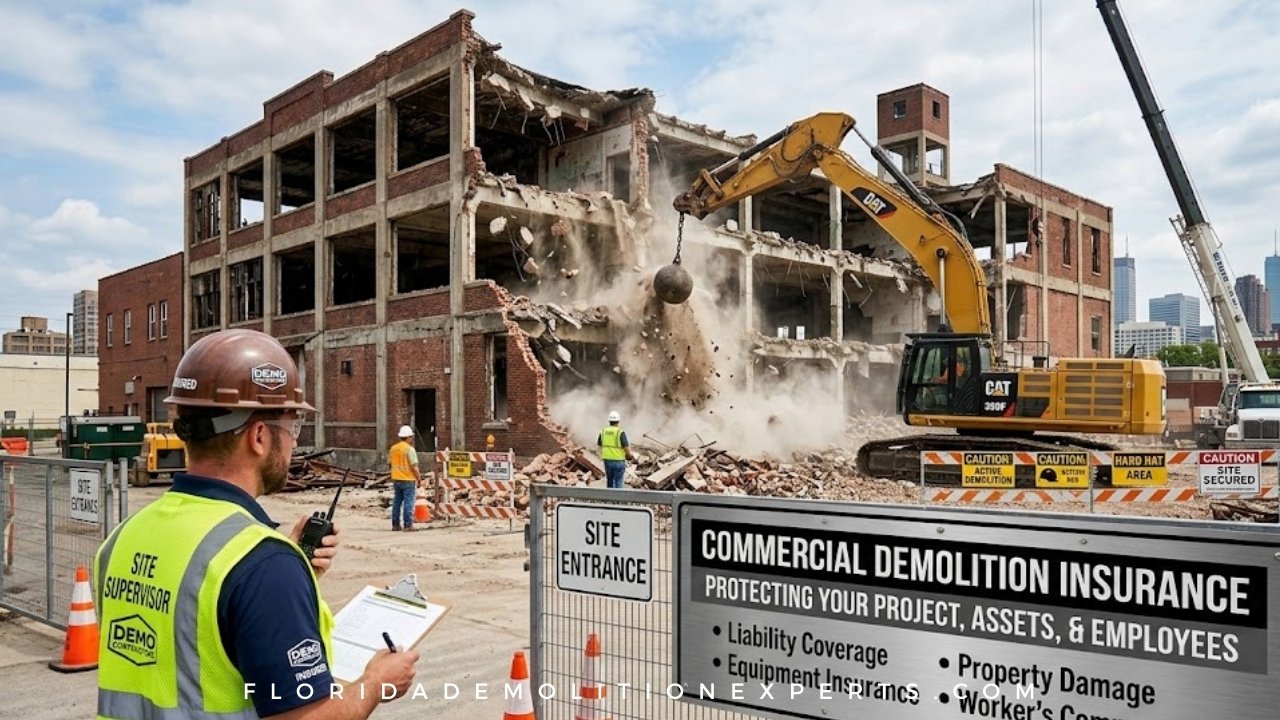
Insurance matters in commercial demolition projects because it protects property owners, contractors, and third parties from financial losses caused by accidents, structural damage, worker injuries, and environmental hazards. Proper insurance coverage ensures legal compliance, reduces liability risks, and safeguards the investment during demolition work.
Introduction
Commercial demolition is a crucial step in many redevelopment and renovation projects. However, tearing down or removing structural elements comes with significant risks, including property damage, worker injuries, and environmental hazards.
That’s why insurance plays a critical role in commercial demolition. Proper insurance coverage protects property owners, contractors, and nearby businesses from financial losses and legal liabilities in the event of unexpected incidents during the demolition process.
What Are the Risks in Commercial Demolition Projects?
Demolition projects involve dismantling structures that may contain hidden hazards. Unlike new construction, demolition deals with aging materials, structural instability, and complex utility systems.
Common risks include:
- Structural collapse
- Damage to nearby buildings
- Gas, electrical, or water line disruption
- Falling debris injuries
- Dust and environmental contamination
- Hazardous materials such as asbestos or lead
Because demolition work often occurs in active commercial areas, these risks can affect not only the demolition crew but also tenants, pedestrians, and neighboring properties.
Insurance provides a financial safety net if any of these situations occur.
What Insurance Do Demolition Contractors Need?
Professional demolition contractors carry multiple types of insurance to protect everyone involved in the project.
General Liability Insurance
General liability insurance covers damages or injuries to third parties during demolition work.
This includes:
- Property damage to neighboring buildings
- Injuries to pedestrians or visitors
- Legal claims related to demolition accidents
This coverage is essential for protecting both the contractor and the property owner.
Workers’ Compensation Insurance
Workers’ compensation insurance protects employees who may be injured on the job.
It typically covers:
- Medical expenses
- Rehabilitation costs
- Lost wages due to injury
Without workers’ compensation coverage, injured workers may attempt to hold the property owner responsible for their injuries.
Pollution Liability Insurance
Older commercial buildings often contain hazardous materials such as asbestos, mold, or lead paint.
Pollution liability insurance covers:
- Environmental contamination
- Hazardous material cleanup
- Third-party health claims
This coverage is particularly important for demolition projects involving older structures.
Builder’s Risk Insurance
Builder’s risk insurance protects the project site itself from unexpected damage during demolition.
This may include protection against:
- Fire
- Vandalism
- Severe weather damage
It helps ensure the project can continue even in the face of unexpected events.
How Does Insurance Protect Property Owners and Managers?
Many property owners assume insurance only protects the contractor. In reality, insurance coverage also protects the client hiring the demolition company.
Key benefits include:
Financial Protection
Insurance covers the cost of damages, lawsuits, and accident-related expenses that could otherwise fall on the property owner.
Legal Protection
If a claim arises from demolition activities, insurance policies often help cover legal defense and settlement costs.
Regulatory Compliance
Cities and municipalities frequently require proof of insurance before issuing demolition permits.
Peace of Mind
Knowing the project is fully insured allows property owners and managers to focus on timelines and redevelopment goals rather than unexpected liabilities.
What Happens If a Demolition Contractor Is Not Insured?
Hiring an uninsured contractor may appear cheaper initially, but it can create serious financial and legal risks.
Potential consequences include:
- Property owners are becoming liable for worker injuries
- Damage claims from neighboring properties
- Project shutdowns due to regulatory violations
- Expensive lawsuits and insurance disputes
- Environmental cleanup costs
In many cases, the financial risk of hiring an uninsured contractor far exceeds any upfront savings.
What Documents Should Property Owners Request Before Demolition?
Before starting any commercial demolition project, property owners should verify the contractor’s insurance coverage.
Important documents to request include:
- Certificate of Insurance (COI)
- Proof of general liability insurance
- Workers’ compensation coverage verification
- Pollution liability insurance documentation
- OSHA safety compliance records
Reviewing these documents ensures the demolition contractor meets safety and compliance standards.
Why Professional Demolition Companies Carry Comprehensive Insurance
Reputable demolition contractors understand that insurance is essential for protecting both their business and their clients.
Professional demolition companies maintain comprehensive coverage because it demonstrates:
- Commitment to safety
- Regulatory compliance
- Financial responsibility
- Risk management expertise
These protections reduce project risks and ensure demolition work can proceed safely and efficiently.
Key Takeaway
Insurance is a critical safeguard in commercial demolition projects. It protects property owners from liability, ensures worker safety, covers unexpected damages, and helps projects comply with local regulations.
Hiring a fully insured demolition contractor significantly reduces financial and legal risks during demolition work.
FAQ’s
What insurance should a demolition contractor have?
A demolition contractor should typically carry general liability insurance, workers’ compensation insurance, pollution liability coverage, and sometimes builder’s risk insurance, depending on the project scope.
Why is insurance important in demolition projects?
Insurance protects property owners, contractors, and third parties from financial losses caused by accidents, property damage, injuries, or environmental hazards during demolition.
Can property owners be liable for demolition accidents?
Yes. If a contractor does not have proper insurance coverage, property owners may become responsible for damages, injuries, or legal claims related to demolition work.
What is a certificate of insurance?
A certificate of insurance (COI) is a document that verifies a contractor’s active insurance coverage and outlines policy limits and coverage types.
How can I verify a demolition contractor’s insurance?
Property owners should request a certificate of insurance and confirm that the coverage is valid before the demolition project begins.
Work With a Professional Demolition Contractor
When planning a commercial demolition project, working with a licensed professional is the best way to protect your investment and avoid costly risks.
If you’re preparing for a demolition project, contact Florida Demolition Experts to learn how our fully insured demolition services can help you move forward with confidence.