
What “Cost Per Square Foot” Really Means
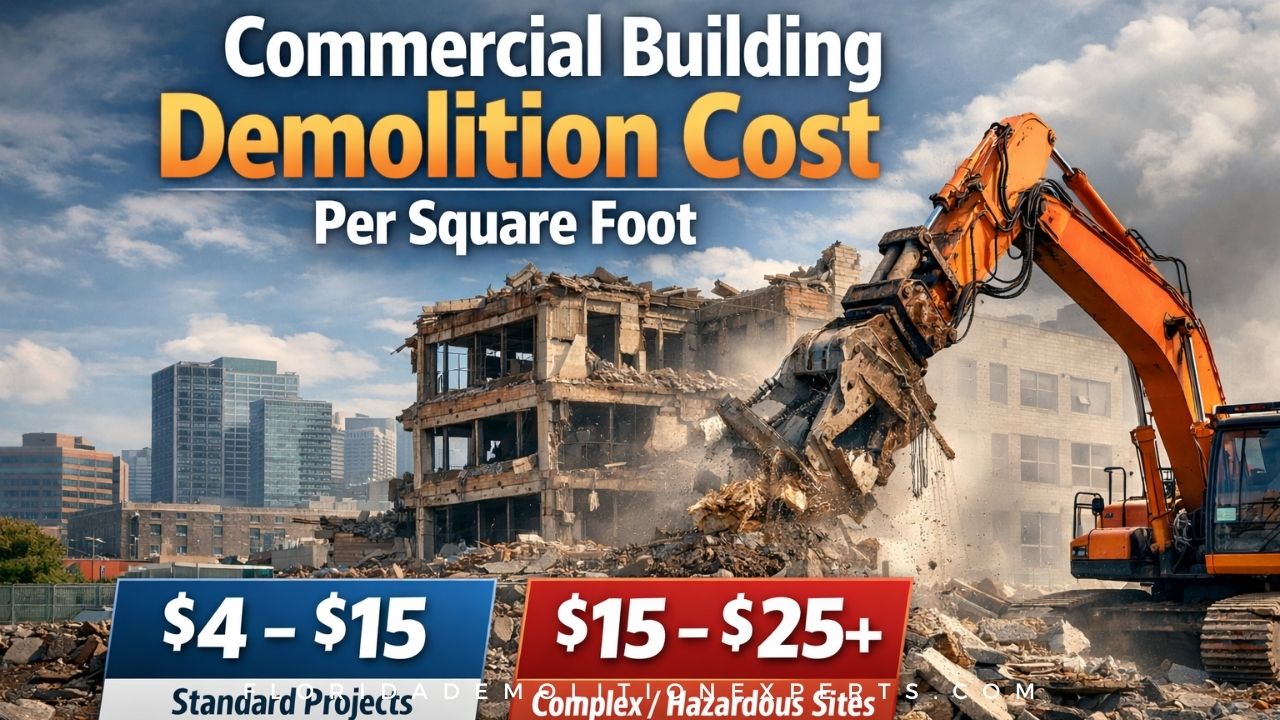
According to the sources, general guidelines for pricing based on building size include:
• 5,001 to 10,000 square feet: $8 to $12 per square foot.
• 10,001 to 20,000 square feet: $12 to $18 per square foot.
• 20,001 to 50,000 square feet: $18 to $25 per square foot.
• Over 50,000 square feet: $25 or higher per square foot.
While larger buildings can sometimes benefit from economies of scale, technical difficulties often increase as buildings grow taller and denser.
The Biggest Factors That Influence Demolition Cost
1. Building Structure and Materials
Material type strongly affects pricing. Reinforced concrete and structural steel require heavier machinery and higher hauling costs than wood or light steel. Older masonry buildings also increase labor and disposal needs due to material weight.
2. Hazardous Materials (Asbestos and Radon)
If asbestos, lead paint, or contamination is present, regulated abatement is legally required before demolition. Asbestos removal typically adds $2 to $3 per square foot to the project cost. Buildings constructed before 1980 must undergo an asbestos test, which incurs its own fee. In certain areas, testing for high radon levels is also required.
3. Location and Site Access
A wide, open site is simpler than a dense urban property. Projects in high-traffic areas may require fencing, traffic control, and dust-suppression systems. Furthermore, property that is difficult to access due to height or placement increases logistical and safety costs.
4. Debris Removal and Recycling
Disposal and hauling are major cost components driven by landfill fees and hauling distances. Concrete and metals are often recyclable, which can provide a salvage credit to offset total costs.
5. Permits and Compliance
Commercial demolition requires municipal permits, utility disconnects, and environmental checks. While standard permits may cost a few hundred dollars, some cities discourage demolition and may charge fees of up to $10,000.
Additional Costs Often Overlooked
Beyond the standard teardown, investors should budget for:
Structural Integrity Stabilization:
Historical Significance:
Soil Remediation:
Site Grading and Security:
How to Calculate Your Estimate
You can also apply a complexity rating (1–10) to adjust your estimate based on architectural difficulty, accessibility, and environmental requirements.
The Demolition Process: Step-by-Step
2. Professional Inspection: Inspect for asbestos, radon, and other toxic contaminants.
3. Selecting a Contractor: Solicit multiple bids. Ensure the contractor is licensed, bonded, and insured.
4. Obtaining Permits: Confirm whether the contractor or the owner is responsible for securing municipal approvals.
5. Demolition and Site Cleanup: Once the structure is down, all debris must be removed so new construction can begin.
Financing Your Demolition Project
Investors can often secure financing for demolition through short-term loans, typically ranging from 1 to 3 years. These loans are frequently interest-only. Lenders may require the borrower to have a commitment from a permanent lender to refinance the property once the new structure is built.
Why Florida Expertise Matters
Demolition in Florida involves hurricane-zone standards, local environmental protections, and city-specific permitting rules. Contractors familiar with regional requirements can plan accurately and reduce the risk of unexpected costs.
Quick Answers to Common Questions
How long does commercial demolition take?
Is demolition cheaper than renovation?
What is the national average cost to dispose of a commercial building?
What increases demolition cost the most?
Concrete structures, asbestos removal, and difficult site access are the biggest cost drivers.
Do demolition contractors handle permits?
Many professional contractors assist with permits, but owners should confirm this in writing.
Ready for a Quote?
The only accurate price comes from a site inspection and contractor evaluation. For owners and developers who want safe, compliant, and efficient services, it is recommended to contact Florida Demolition Experts or a local licensed professional for a site-specific estimate and timeline.