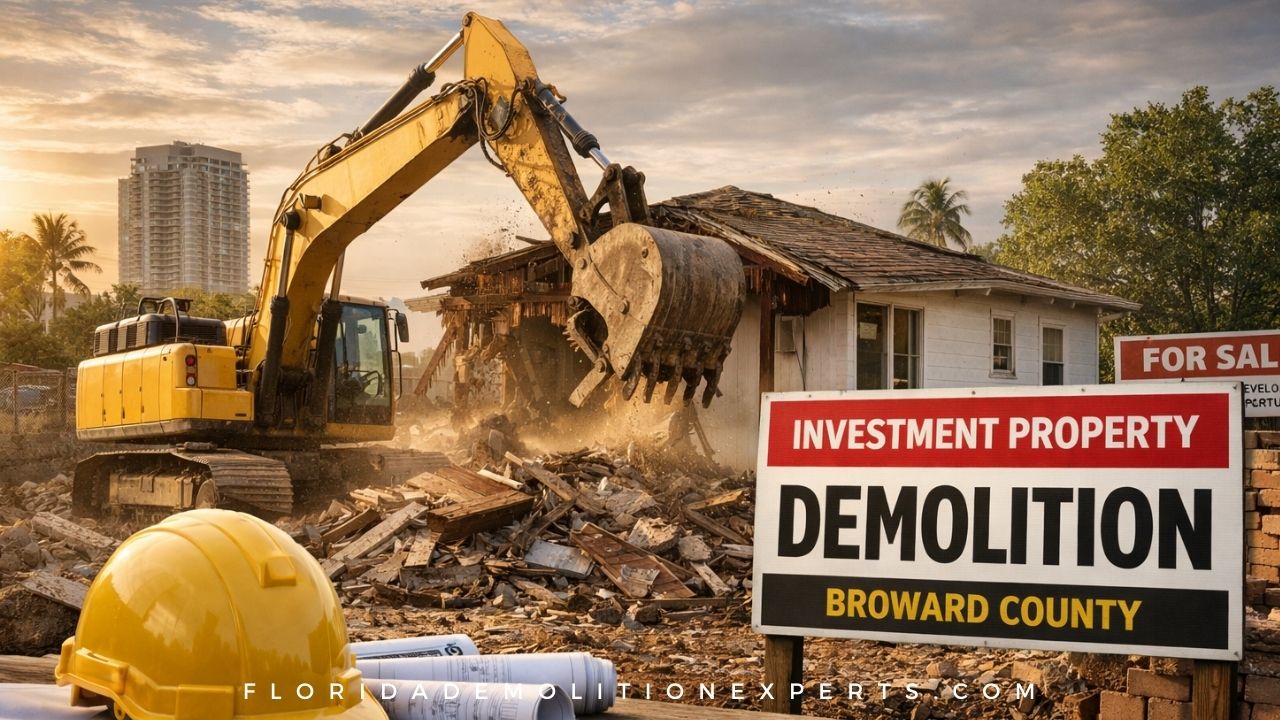


Demolishing a home or structure in Broward County isn’t as simple as bringing in heavy equipment and tearing things down. The county has strict regulations in place to protect public safety, property values, environmental health, and infrastructure.
Whether you’re planning to remove an old shed, tear down a single-family home, or clear land for a new build, understanding these rules early can save you time, penalties, and costly delays.
This guide breaks down everything homeowners need to know before starting a demolition project in Broward County, Florida.
Why Broward County Has Demolition Regulations
Demolition impacts more than just the structure being removed. Broward County enforces regulations to:
- Prevent damage to nearby homes and utilities
- Ensure safe handling of hazardous materials like asbestos or lead
- Control dust, debris, and stormwater runoff
- Protect trees, wildlife areas, and drainage systems
- Verify that the proper licenses and insured professionals are involved
Following these rules keeps your project legal and protects you from liability.
1. Permits Required for Demolition
Before any demolition begins, homeowners must obtain the proper permits from their local city building department, even though the rules are based on Broward County’s building codes.
Common Permits Needed
- Demolition Permit – Required for full or partial demolition
- Utility Disconnection Permits – For water, sewer, electric, and gas
- Tree Removal Permit – If protected trees may be affected
- Environmental / Asbestos Reports – Required for older buildings
Most cities in Broward (Fort Lauderdale, Hollywood, Miramar, Plantation, etc.) require detailed site plans, contractor information, and waste-disposal plans before approving the permit.
2. Hiring a Licensed Demolition Contractor
Florida requires demolition work to be performed by a State- or County-licensed demolition contractor.
The contractor must provide:
- License and insurance verification
- Proof of experience with residential demolition
- Site safety plans
- Waste hauling and disposal documentation
Hiring an uncertified contractor can result in immediate fines and permit rejection.
3. Asbestos & Hazardous Materials Inspection
Broward County strictly enforces federal EPA NESHAP rules. Any home built before 1980 must be inspected for:
- Asbestos
- Lead-based paint
- Mold or contaminated materials
If asbestos is found, it must be removed by a certified abatement professional before demolition begins. Failure to follow this rule can lead to fines of thousands of dollars per day.
4. Utility Disconnections
Before demolition starts, all utilities must be safely shut off and capped:
- Water
- Sewer
- Electricity
- Natural Gas
- Cable/Internet lines
The county requires proof of each disconnection from the respective utility provider.
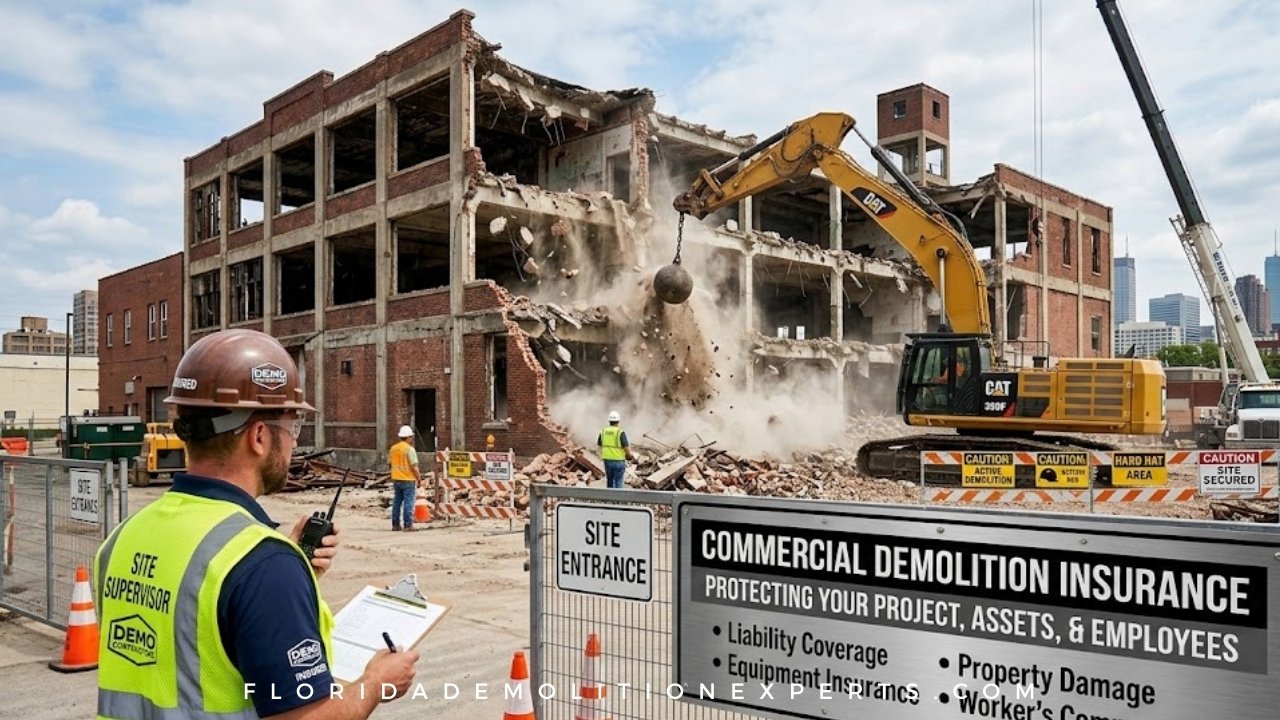
5. Site Safety, Fencing & Debris Control
Demolition sites in Broward County must follow strict safety guidelines:
- Erect temporary fencing to secure the area
- Install protective barriers to stop debris from affecting neighbors
- Use water spraying to reduce dust
- Provide proper signage for public awareness
If your property borders a sidewalk or roadway, additional safety measures may be required.
6. Environmental & Tree Protection Rules
Even during demolition, environmental guidelines apply:
- Certain trees require permits for trimming or removal
- Drainage and stormwater systems cannot be damaged
- Erosion-control measures must remain in place
- Wildlife habitats (especially near canals) must be protected
Ignoring these rules may cause the county to stop your project immediately.
7. Disposal of Demolition Debris
Broward County requires the responsible disposal of construction debris:
- Concrete, metal, and wood must go to approved disposal or recycling facilities
- Hazardous waste must be separated and handled by licensed haulers
- Dumping debris illegally can result in severe penalties
Your demolition contractor must manage all disposal activities and provide receipts upon request.
8. Final Inspection & Site Clearance
Once the demolition is complete:
- A building inspector will visit the site
- They will verify that all debris is cleared
- The land must be graded and safe
- Utilities must be capped appropriately
- The site must be secured until new construction begins
Only after the inspector signs off is the demolition considered legally complete.
Tips for Homeowners Planning Demolition in Broward County
- Start with a site evaluation to understand possible hazards
- Hire a contractor who specializes in Broward demolition rules
- Prepare all documents early to avoid permit delays
- Notify neighbors ahead of time to avoid complaints
- Never try DIY demolition, it’s illegal and unsafe
Conclusion
Demolition in Broward County requires careful planning, strict compliance, and the help of a qualified demolition contractor. Understanding the county’s regulations helps homeowners avoid violations, extra costs, and unexpected delays, clearing the way for safe and efficient redevelopment.
Need Professional Demolition Help?
If you want a smooth, legal, and stress-free demolition process, Florida Demolition Experts are here to help. We handle everything from permits to site cleanup safely, professionally, and in compliance with Broward County code.