
If a demolition contractor damages a neighboring property in Fort Lauderdale, the contractor’s general liability insurance is the first line of financial responsibility, not the property owner who hired them. Florida law requires licensed demolition contractors to carry general liability insurance because demolition work poses real risks to adjacent structures, fences, landscaping, and utilities.
If the contractor is unlicensed or uninsured, the situation becomes significantly more complicated, and the property owner who hired them may share in the liability.
This article explains exactly what happens, who pays, and how to protect yourself before work begins.
Who Is Legally Responsible When a Neighbor’s Property Gets Damaged?
The licensed contractor is the primary responsible party. When you hire a contractor to perform demolition on your property, they assume professional responsibility for executing the work safely and without causing damage beyond the permitted scope.
In Florida, contractor liability flows from two sources:
- General liability insurance required for licensed contractors covers third-party property damage caused during the job.
- Florida Statute 489 governs contractor licensing and holds contractors accountable for damage resulting from negligent work.
If the contractor holds an active license and valid insurance, the claim goes to their insurer. If they are unlicensed, Florida courts have held that property owners can be jointly liable for choosing to hire someone without proper credentials.
This is one of the most important reasons to ask the right questions before hiring a demolition contractor, specifically to request proof of general liability coverage and verify the license number before any work begins.
What Types of Neighbor Damage Happen During Demolition?
Fort Lauderdale’s urban lot density makes damage to neighboring property a real risk during demolition jobs. The most common incidents include:
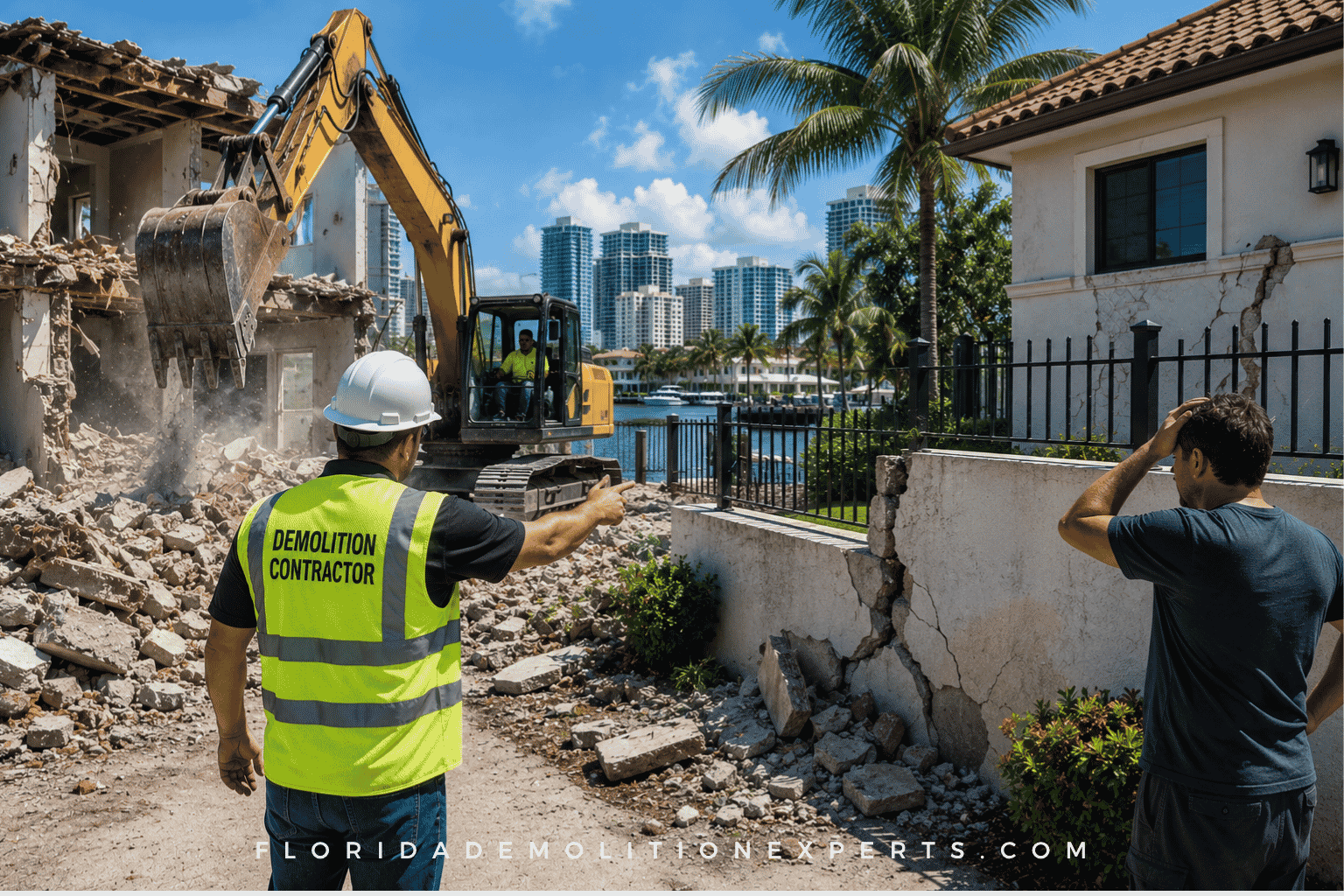
- Structural vibration cracks from heavy equipment and mechanical demolition that cause hairline to significant cracks in adjacent walls and foundations
- Fence and wall damage when shared fences, block walls, and retaining walls are clipped during teardown
- Utility strikes when underground utility lines that cross property boundaries are severed if the site is not properly marked
- Debris impact from falling concrete, lumber, or roofing material that lands beyond the property line
- Dust and debris infiltration when fine concrete dust enters a neighbor’s pool, HVAC system, or interior through open windows
- Drainage disruption when demolition disturbs grading or drainage patterns and redirects water onto adjacent lots
South Florida’s tight residential lots, common in neighborhoods like Victoria Park, Rio Vista, and Wilton Manors, make these risks higher than in suburban markets with larger setbacks.
What Should You Do If a Neighbor’s Property Is Damaged During Your Demo Job?
Step 1: Stop Work Immediately
If damage is visible or reported while work is in progress, the job should pause. Continuing work while damage is occurring compounds the liability and can escalate the claim.
Step 2: Document Everything
Photograph and video the damage from multiple angles before anything is repaired or cleaned up. Get timestamps on every image. This documentation protects both you and the contractor when the insurance claim is filed.
Step 3: Notify the Contractor in Writing
Send a written notice to the contractor; email is sufficient, describing the damage and requesting their insurance information. Do not accept a verbal promise to handle it.
Step 4: File a Claim With the Contractor’s Insurance
The contractor should provide the contact information for their general liability insurer. You or the neighbor files a third-party property damage claim directly with that insurer. The insurer sends an adjuster to assess the damage and determine the payout.
Step 5: Contact Broward County if the Contractor Is Unresponsive
If the contractor refuses to engage or lacks insurance, file a complaint with the Florida Department of Business and Professional Regulation (DBPR).
This agency licenses and disciplines contractors in Florida and has authority to act on complaints regarding property damage caused by unlicensed or negligent work.
What If the Contractor Is Uninsured or Unlicensed?
This is where the situation becomes serious for the property owner.
Florida law does not protect homeowners who knowingly hire unlicensed contractors. If the contractor has no insurance and cannot pay for the damage, the neighbor’s attorney may name the property owner in a civil claim, arguing that hiring an unqualified contractor was itself a negligent act.
Before any demolition work starts, verify the contractor’s license at myfloridalicense.com and request a certificate of insurance naming you as an additional insured. This one step is the most effective protection you have.
Understanding the stages of demolition in Broward County, including the pre-demolition site assessment phase, helps you see where neighbor protection measures should be built into the plan before a single wall comes down.
Does the Demolition Permit Offer Any Protection?
Yes, but not in the way most people expect. A properly pulled demolition permit in Broward County requires the contractor to submit a site plan and comply with county inspection requirements.
This creates an official record of the approved work scope, which serves as useful evidence if a neighbor later claims that the damage exceeds what was permitted.
The permit does not cap your liability or the contractor’s liability. It establishes that the work was performed under a regulated framework, which matters in any legal or insurance dispute.
Unpermitted demolition removes that protection entirely. A contractor who skips the permit process has no documented scope of work, and any resulting damage is far harder to defend against.
Can the Neighbor Sue You Directly?
Yes. A neighbor whose property is damaged during demolition can file a civil claim against any party they believe is responsible, including the property owner who hired the contractor.
In practice, if the contractor is licensed and insured, the claim resolves through insurance without reaching the property owner.
But if there are gaps in coverage, disputes about fault, or the contractor is unlicensed, the property owner becomes a viable target.
The best protection against this scenario is a licensed contractor, verified insurance, a pulled permit, and written documentation of the pre-demo site condition, including photographs of the neighboring property before work begins.
How Do Licensed Demolition Contractors Prevent Neighbor Damage?
A professional demolition contractor takes specific steps before and during the job to protect adjacent properties. These are not optional. They are part of executing a safe, compliant project in an urban Florida market.
Pre-demolition measures a qualified contractor should perform:
- Pre-construction survey of neighboring structures with photos documenting existing condition
- Underground utility marking through Florida’s Sunshine State One Call system (call 811 before any dig)
- Installation of protective barriers, debris netting, or temporary fencing where structures are close
- Dust suppression using water during mechanical demolition
- Controlled demolition sequencing that reduces vibration and debris spread
For commercial projects, these precautions are even more detailed. The cost components of commercial demolition in Broward County include site protection and neighbor coordination as line items on a properly scoped project, not afterthoughts.
What Questions Should You Ask Before Hiring a Demolition Contractor in Fort Lauderdale?
Before signing any contract, get clear answers to these:
- What is your general liability coverage limit? Can you provide a certificate of insurance today?
- Will you pull the demolition permit, or am I expected to?
- Do you carry workers’ compensation coverage for all on-site crew members?
- Will you conduct a pre-demo survey of the neighboring property and document it?
- How do you handle utility marking and underground clearance before work begins?
- What is your process if a neighboring property is damaged during the job?
A contractor who hesitates on any of these is telling you something important.
Hire a Contractor Who Protects Your Neighbors and You
Florida Demolition Experts carries full general liability insurance on every residential and commercial demolition project we perform in Fort Lauderdale, Broward County, Hollywood, Pompano Beach, and surrounding areas.
We pull the permit, mark utilities, document neighboring property conditions before we start, and use controlled demolition methods that protect adjacent structures throughout the job.
If something goes wrong, which is rare when the work is done right, you have a licensed, insured contractor standing behind it. That is what separates a professional demo from a liability waiting to happen.
Get a free site assessment and quote: we come to you, assess the site, and provide a line-item proposal that includes all costs. No surprises.